Introduction
Decorating a Christmas tree with lights sounds simple until you start wondering how many lights you actually need.
Too few lights can make a tree look dark and uneven, while too many can make decorating unnecessarily difficult. The right amount depends on several factors, including the height and width of your tree, the type of lights you use, and how bright or heavily decorated you want your tree to look.
So, how many lights do you need for a Christmas tree?
As a general starting point, plan for approximately 100 lights for every 1 foot of tree height. However, this is only a guideline. A narrow pencil tree may need fewer lights, while a wide, full Christmas tree may look better with additional lights.
This guide explains how to estimate the number of lights you need for different Christmas tree sizes and how to choose the right lighting style for your tree.
Quick Answer: How Many Lights Do You Need?
A simple starting point is:
About 100 lights per foot of Christmas tree height.
Here is a general guide:
| Tree Height | Suggested Number of Lights |
|---|---|
| 2 ft | 200 lights |
| 3 ft | 300 lights |
| 4.5 ft | 450 lights |
| 5 ft | 500 lights |
| 6 ft | 600 lights |
| 7 ft | 700 lights |
| 7.5 ft | 750 lights |
| 9 ft | 900 lights |
| 10 ft | 1,000 lights |
| 12 ft | 1,200 lights |
These numbers should not be treated as an exact requirement.
Your tree's width, branch density, lighting style, and personal preference can all change how many lights you need.
1. How Many Lights for a 6-Foot Christmas Tree?
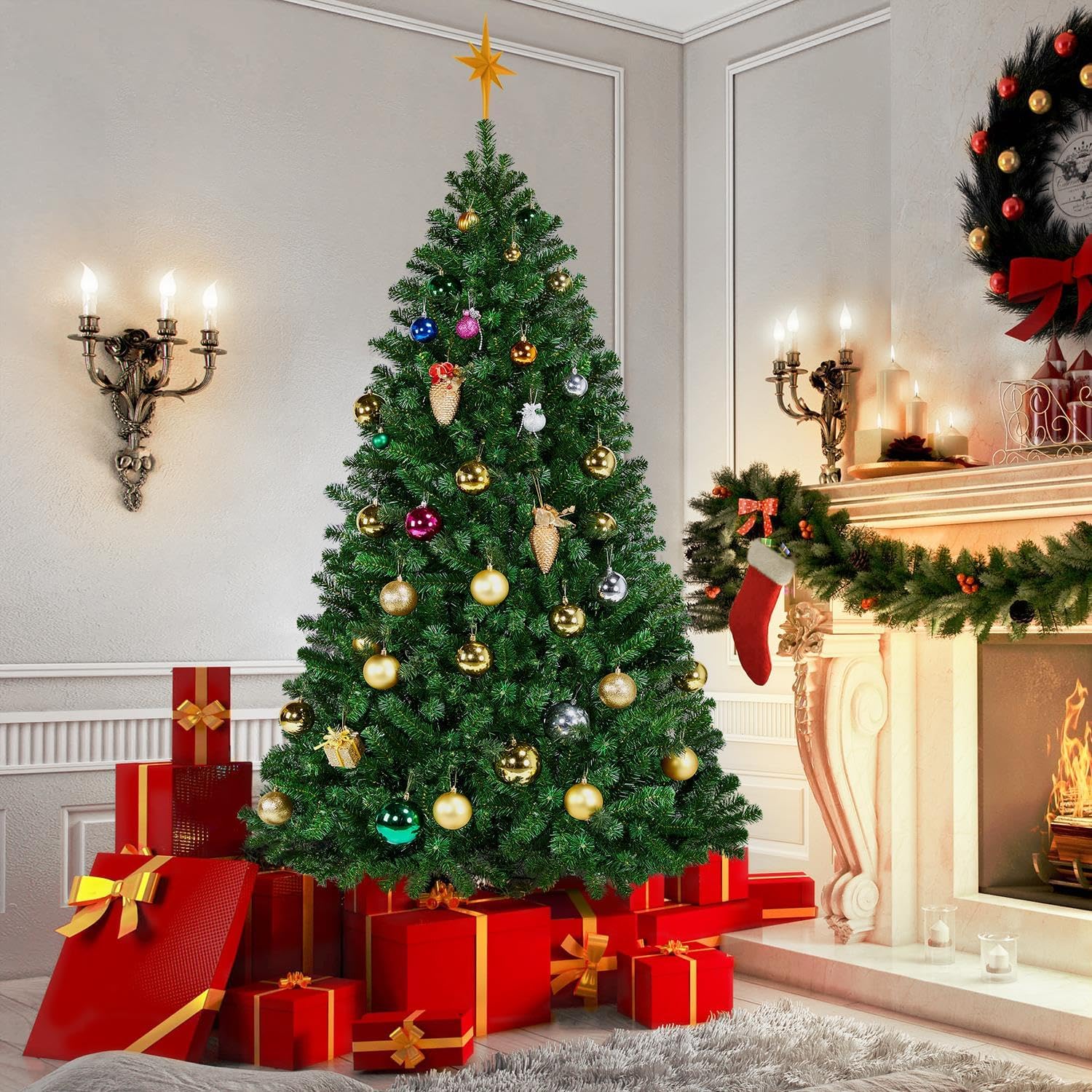
For a typical 6-foot Christmas tree, around 600 lights is a reasonable starting point.
However, the ideal amount depends on the shape of the tree.
A full 6-foot artificial tree with dense branches may require more lights to create an evenly illuminated appearance. A narrow or pencil-style tree may need fewer.
For example, a 6-foot tree with a relatively narrow profile can often look well lit without using as many lights as a wide, full tree.
If you prefer a subtle lighting effect, you can use fewer lights. If you want the tree to have a bright, heavily illuminated appearance, consider using more.
A practical range for a 6-foot tree
- Light coverage: approximately 400–500 lights
- Moderate coverage: approximately 500–700 lights
- Bright coverage: approximately 700+ lights
These are practical decorating ranges rather than strict rules.
2. How Many Lights for a 7.5-Foot Christmas Tree?
For a 7.5-foot Christmas tree, the 100-lights-per-foot guideline gives approximately 750 lights.
A full-size 7.5-foot tree may need more lighting than a narrow 7.5-foot pencil tree because there is significantly more branch area to cover.
For a traditional full tree, approximately 700–900 lights can be a useful starting range.
If your tree already comes pre-lit, you do not necessarily need to add another full set of lights. Instead, consider the number and distribution of the lights already installed.
For example, a pre-lit tree with hundreds of built-in lights may already provide enough illumination for your decorating style.
3. How Many Lights for a 9-Foot Christmas Tree?
A 9-foot Christmas tree requires considerably more lighting than a 6-foot tree.
Using the basic guideline:
9 feet × 100 lights = approximately 900 lights
For a full 9-foot tree, you may want approximately 800–1,100 lights, depending on the tree's width and how bright you want it to appear.
If the tree has very dense branches, you may need additional lights to prevent dark areas.
For tall trees, it is also important to think about how you will install the lights safely. A ladder or appropriate equipment may be necessary depending on the height of the tree and the location where it is placed.
4. Does Tree Width Matter?
Yes.
Tree height is easy to measure, but width is one of the most important factors people overlook when estimating lighting needs.
Two trees can both be 7.5 feet tall but require different numbers of lights.
For example:
7.5-foot full tree
A wide traditional Christmas tree has more branches and surface area. It may require more lights.
7.5-foot pencil tree
A narrow pencil tree has a much smaller profile and may require fewer lights.
This is why a lights-per-foot calculation should be treated as a starting point rather than an exact formula.
When comparing trees, consider both:
- Height
- Width
You can learn more about choosing the right tree dimensions in our Artificial Christmas Tree Size Guide.
5. Full vs. Pencil Christmas Trees: How Lighting Needs Differ
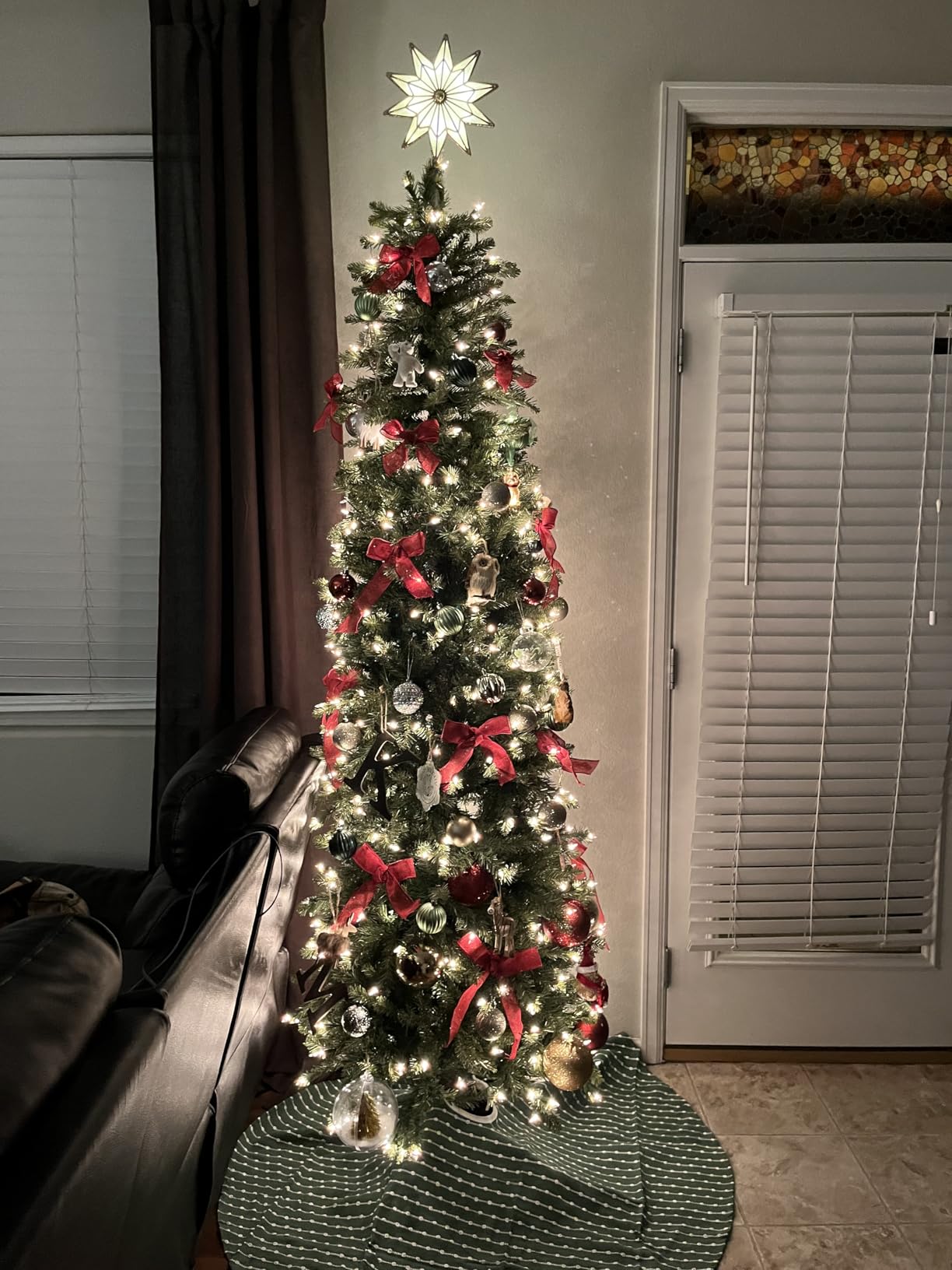
The shape of your Christmas tree can significantly affect how many lights you need.
Full Christmas Trees
Full trees have a wide, traditional shape with many branches.
They generally require more lights because there is more space to cover.
If you want a bright and evenly illuminated appearance, you may want to use more than the basic 100-lights-per-foot guideline.
Pencil Christmas Trees
Pencil trees are much narrower.
They are particularly useful for:
- Apartments
- Small living rooms
- Entryways
- Bedrooms
- Offices
- Narrow corners
Because they have less surface area, they usually require fewer lights than a full tree of the same height.
For example, a 7.5-foot pencil tree does not necessarily need the same number of lights as a wide 7.5-foot traditional tree.
6. How Many Lights Do You Need for a Pre-Lit Christmas Tree?
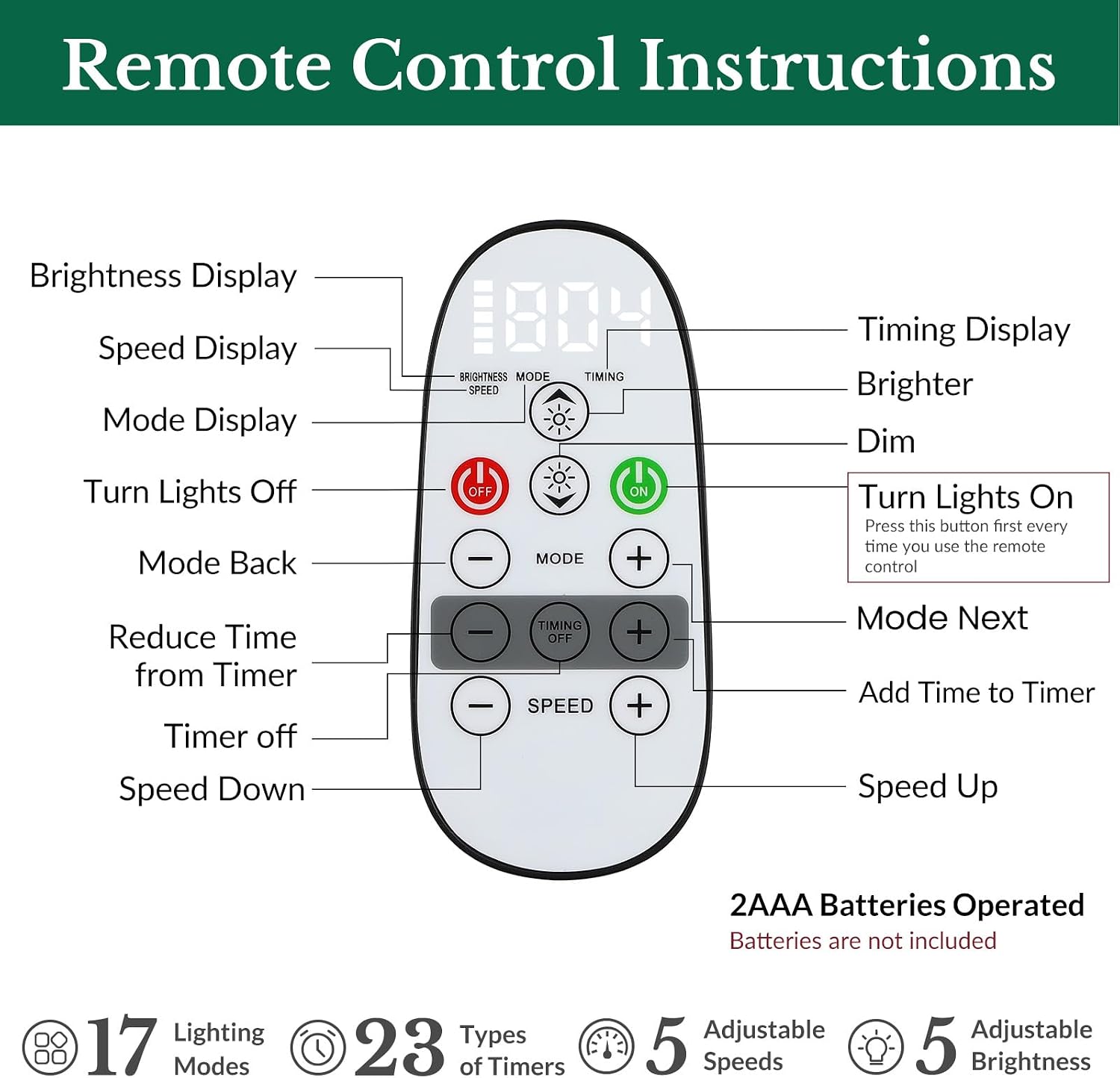
Pre-lit Christmas trees already have lights installed, which means you don't have to calculate the number of lights from scratch.
This is one of the biggest advantages of a pre-lit tree.
When shopping for a pre-lit Christmas tree, look at:
- Number of lights
- Light color
- Lighting modes
- Light type
- Whether the lights are replaceable
- Whether sections connect automatically
- Warranty coverage for the lights
Some trees include hundreds of lights.
For example, a 7.5-foot pre-lit artificial tree may include several hundred lights distributed throughout the branches.
The number of lights alone, however, doesn't tell the entire story.
Light placement matters too.
A tree with fewer but well-distributed lights may appear more evenly illuminated than a tree with more lights concentrated in certain areas.
7. Pre-Lit vs. Unlit Christmas Trees
When choosing an artificial Christmas tree, one of the biggest decisions is whether to buy a pre-lit or unlit model.
Pre-Lit Christmas Trees
Advantages include:
- Faster setup
- Less time wrapping lights
- More consistent light distribution
- Convenient for annual decorating
They are especially useful if you want a simpler Christmas decorating process.
However, you have less control over the original lighting arrangement, and you should pay attention to the warranty and construction of the integrated lighting system.
Unlit Christmas Trees
Unlit trees give you more flexibility.
You can choose:
- Number of lights
- Light color
- Bulb style
- Light spacing
- Decorating pattern
- Lighting effects
They are also useful if you already own Christmas lights that you want to use.
If you're still deciding between the two, see our guide:
Pre-Lit vs. Unlit Christmas Trees: Which One Should You Choose? →
8. How Many String Lights Do You Need?
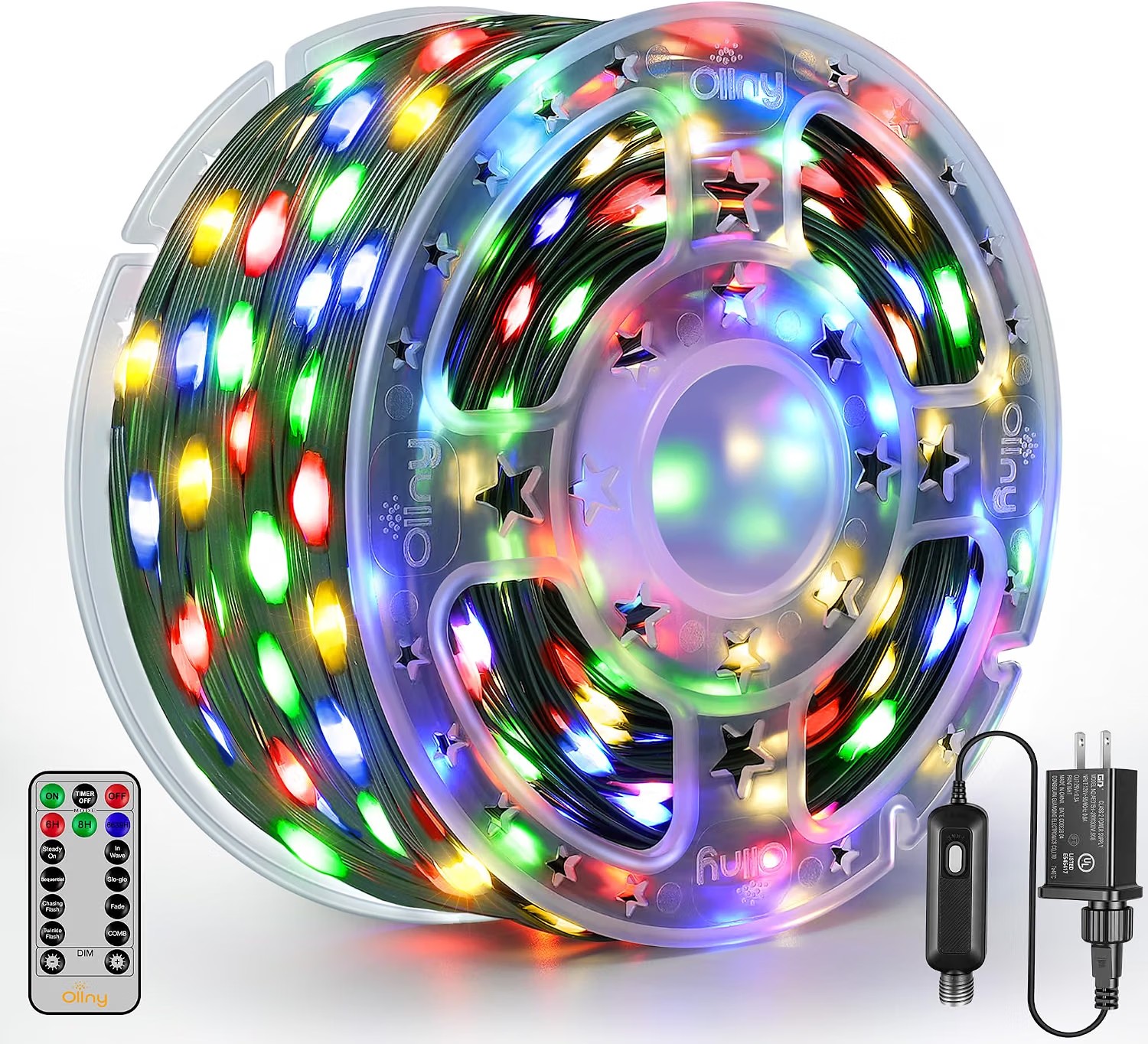
There is an important difference between number of bulbs and number of light strings.
A package might contain:
- 100 lights
- 200 lights
- 300 lights
- 500 lights
But the actual length of the light string can vary.
For example, two products can both contain 100 bulbs while having different total string lengths because the spacing between bulbs is different.
Therefore, don't look only at the bulb count.
Before buying Christmas lights, check:
- Total number of bulbs
- Total string length
- Bulb spacing
- Connection limits
- Indoor/outdoor rating
- Power requirements
If you're buying multiple strings, knowing the total length can make installation much easier.
9. Should You Put Lights on the Inside of the Tree?
For a fuller and more dimensional appearance, consider placing some lights deeper into the branches rather than keeping every bulb near the outside.
Lighting deeper inside the tree can help:
- Create depth
- Reduce dark areas
- Highlight branch structure
- Make the tree appear brighter
- Create a more layered appearance
However, you don't need to place every light deep inside the tree.
A combination of inner and outer lighting can create a balanced look.
For artificial trees with dense branches, take some time to separate and fluff the branches before installing lights.
10. How to Put Lights on a Christmas Tree
Once you know approximately how many lights you need, the next step is installation.
A simple approach is to work from the bottom of the tree toward the top.
Step 1: Fluff the branches
Before adding lights, spread out the branches as much as possible.
This is particularly important for artificial Christmas trees because branches are often compressed during storage and shipping.
A properly fluffed tree will look fuller and will also make it easier to distribute lights evenly.
Step 2: Start near the power source
Begin at the bottom of the tree near the location where you will connect the lights.
This can make cable management easier.
Step 3: Work upward
Gradually wrap or weave the lights around the tree.
Try to maintain relatively even spacing rather than placing large groups of bulbs in one area.
Step 4: Add depth
Place some lights closer to the trunk and others toward the outside of the branches.
This can create more depth.
Step 5: Check the tree from a distance
After installing the lights, step back and look at the entire tree.
Check for:
- Dark sections
- Overly bright areas
- Uneven spacing
- Exposed wires
- Areas that need additional lights
It is much easier to make adjustments before adding ornaments.
11. Should Christmas Tree Lights Be Wrapped Vertically or Horizontally?
There are several ways to install Christmas tree lights.
Horizontal Method
The traditional approach is to wrap the lights around the tree horizontally.
This method is familiar and works well for many trees.
Vertical Method
Another approach is to run the lights vertically from the bottom toward the top.
This can make it easier to remove the lights later and can provide more direct control over the distribution.
Branch-by-Branch Method
You can also work section by section, especially with artificial trees that are divided into multiple sections.
The best method depends on your tree shape and personal preference.
The goal is simple:
Create even lighting without large dark areas or excessive wire visibility.
12. Warm White vs. Multicolor Christmas Tree Lights
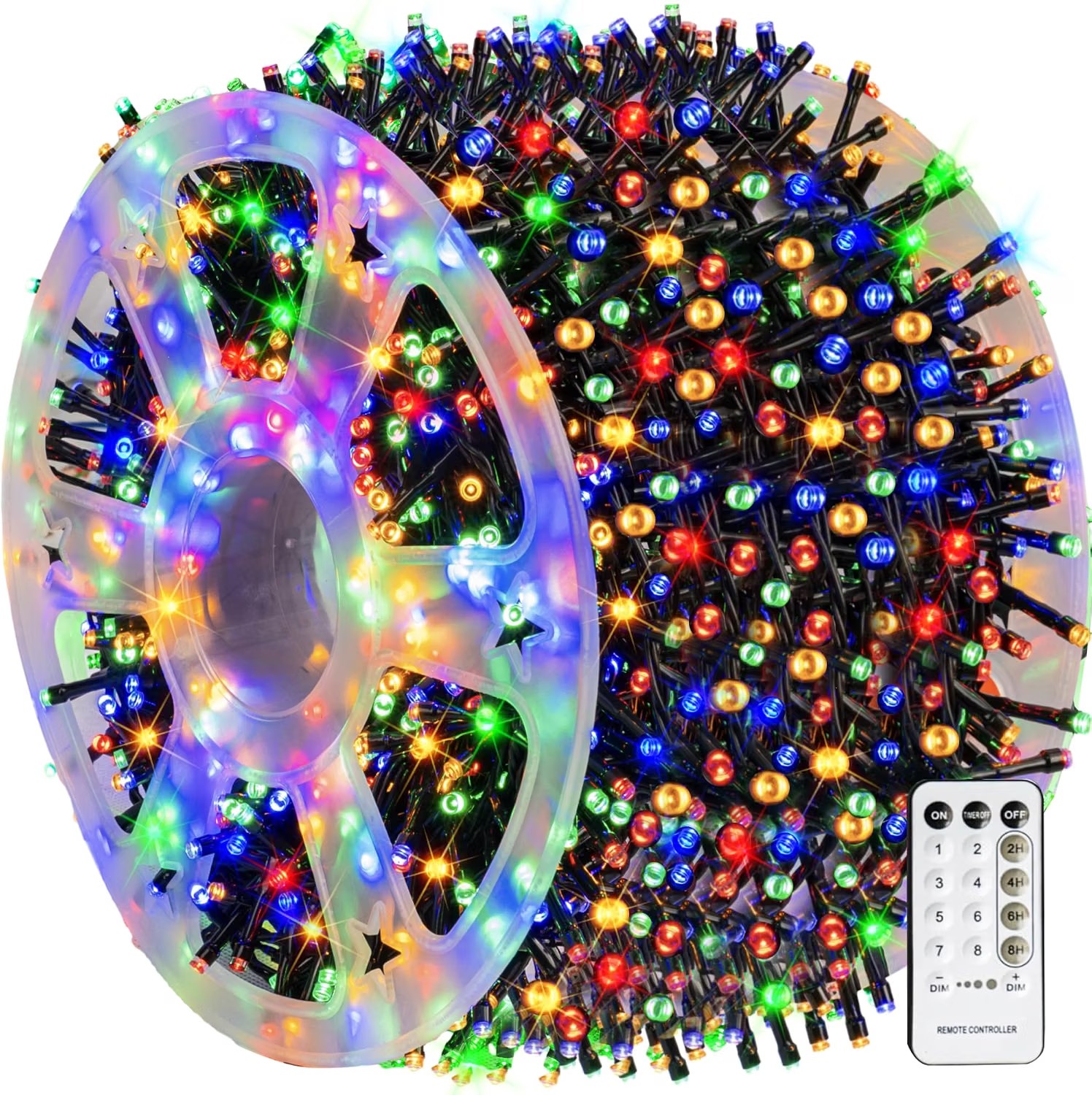
The number of lights isn't the only factor that affects how your tree looks.
Light color can dramatically change the appearance.
Warm White
Warm white lights create a traditional and cozy Christmas atmosphere.
They work particularly well with:
- Traditional ornaments
- Gold decorations
- Red ornaments
- Natural greenery
- Classic Christmas themes
Multicolor
Multicolor lights create a more playful and colorful appearance.
They can work well for:
- Family Christmas trees
- Colorful ornaments
- Children's rooms
- More traditional holiday decorating styles
Cool White
Cool white lights create a cleaner and brighter appearance.
They may work well with:
- Silver ornaments
- Modern decorations
- Blue-and-white themes
- Minimalist Christmas décor
Choose the light color based on the overall decorating style rather than simply the number of bulbs.
13. How Many Lights Should You Use If You Want a Very Bright Tree?
If you prefer a heavily illuminated Christmas tree, you can go beyond the basic 100-lights-per-foot guideline.
For example, instead of approximately 600 lights on a 6-foot tree, you might choose 700 or more.
The exact number depends on:
- Tree width
- Branch density
- Bulb size
- Bulb spacing
- Light brightness
- Decorating style
However, more lights do not automatically mean a better-looking tree.
If the lights are poorly distributed, adding more bulbs may simply create brighter areas without improving the overall appearance.
Distribution is often more important than the raw bulb count.
14. How Many Lights for a Christmas Tree by Size?
Here is a simplified reference table:
| Tree Size | Starting Point | Approximate Range |
|---|---|---|
| 2 ft | 200 | 150–250 |
| 3 ft | 300 | 250–350 |
| 4.5 ft | 450 | 350–550 |
| 5 ft | 500 | 400–600 |
| 6 ft | 600 | 500–700 |
| 7 ft | 700 | 600–800 |
| 7.5 ft | 750 | 650–900 |
| 9 ft | 900 | 800–1,100 |
| 10 ft | 1,000 | 900–1,200 |
| 12 ft | 1,200 | 1,000–1,400 |
Again, these figures are guidelines rather than exact requirements.
A narrow tree may need fewer lights, while a wide, dense tree may need more.
15. What About Flocked Christmas Trees?
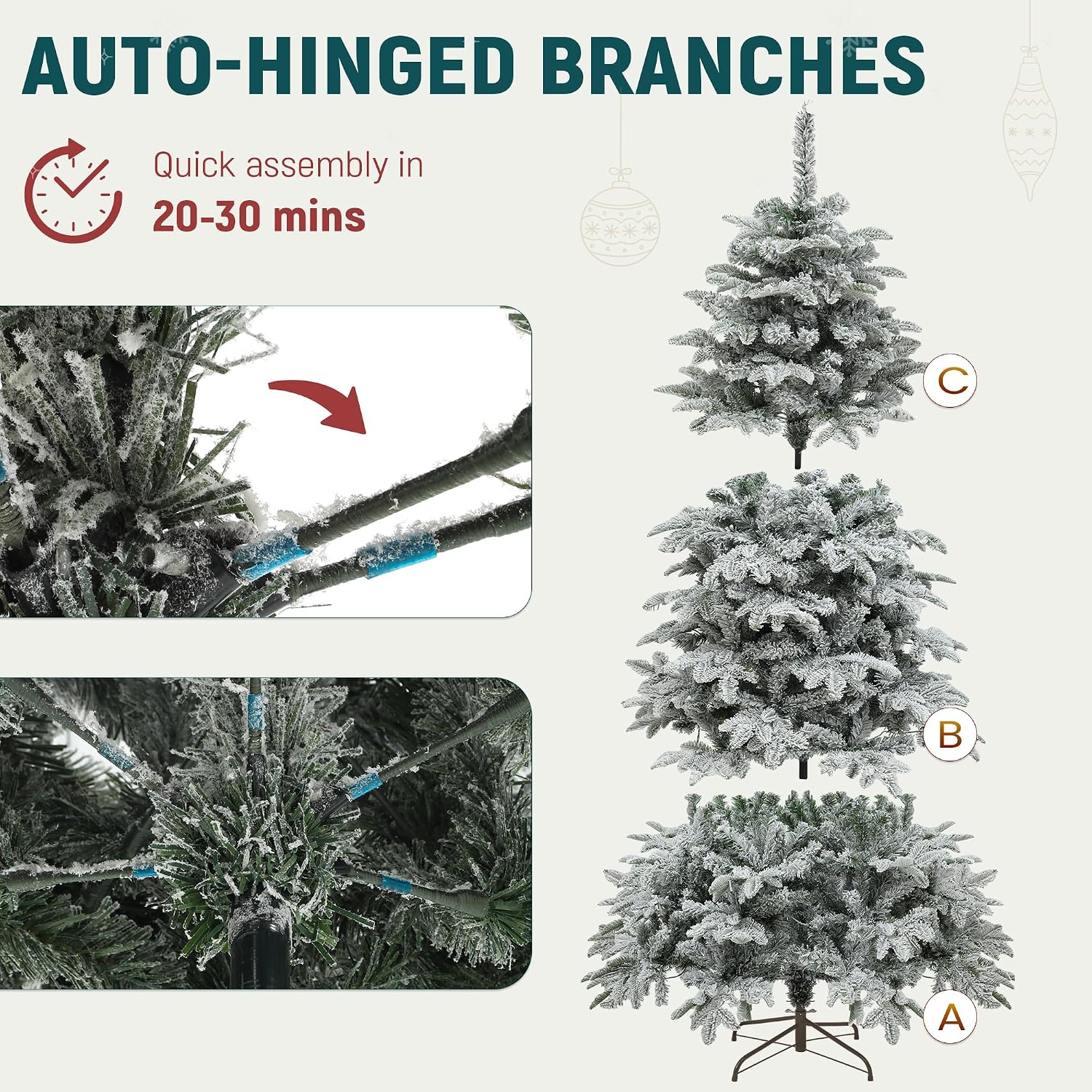
Flocked Christmas trees have artificial snow applied to the branches.
The white appearance can affect how the lights look.
Warm white lights can create a soft, cozy appearance against the snow-covered branches.
Because the branches are lighter in color, the lights may also appear more noticeable than they would on a dark green tree.
If you're decorating a flocked tree, you may not need to dramatically increase the number of lights simply because it is flocked.
Instead, consider the overall brightness and how the light reflects from the branches.
16. Do You Need More Lights for a Very Dense Artificial Tree?
Potentially, yes.
Artificial trees with a high number of branch tips can have a very full appearance.
That density can make it more difficult for light to travel through the branches.
If you want the tree to appear evenly illuminated from different angles, additional lights may help.
This is another reason why two trees with the same height can have different lighting requirements.
When shopping for an artificial Christmas tree, look at:
- Tree height
- Tree width
- Branch-tip count
- Branch density
- Tree shape
These details can help you estimate how much lighting you will need.
17. A Simple Christmas Tree Lighting Formula
If you want a quick calculation, start with:
Tree height in feet × 100 = approximate number of lights
For example:
6-foot tree
6 × 100 = 600 lights
7.5-foot tree
7.5 × 100 = 750 lights
9-foot tree
9 × 100 = 900 lights
Then adjust the number based on the tree's width and your preferred lighting intensity.
Want a brighter look?
Add more lights.
Have a narrow pencil tree?
You may need fewer.
Have a wide, dense tree?
You may need more.
This simple calculation gives you a useful starting point without making the process unnecessarily complicated.
18. Common Mistakes When Buying Christmas Tree Lights
Mistake 1: Looking only at bulb count
A package containing 300 bulbs doesn't tell you how long the string is.
Always check the total string length and bulb spacing.
Mistake 2: Ignoring tree width
A wide 7.5-foot tree can require considerably more lighting than a narrow 7.5-foot tree.
Mistake 3: Buying too few lights
If you're unsure, having some extra lights is usually more convenient than discovering halfway through decorating that you need another set.
Mistake 4: Installing lights before fluffing the tree
Always fluff the artificial tree first.
Otherwise, you may have to move the lights around after spreading the branches.
Mistake 5: Forgetting the power connection
Plan where the tree will be placed and where the lights will connect to power before beginning installation.
19. How Many Lights Should You Buy?
If you're starting from scratch, use this process:
Step 1: Measure the tree height.
Step 2: Check the tree width.
Step 3: Decide whether you want subtle, moderate, or bright lighting.
Step 4: Use approximately 100 lights per foot as your starting point.
Step 5: Check the string length and bulb spacing.
Step 6: Buy enough lights to cover the tree without creating large gaps.
This approach is much more reliable than choosing a random number of light strings.
20. Final Thoughts
There is no single perfect number of Christmas tree lights.
The 100 lights per foot guideline is a useful starting point, but the final amount depends on the tree's height, width, shape, branch density, and the look you want to create.
For a typical tree:
- 6-foot tree: around 600 lights
- 7.5-foot tree: around 750 lights
- 9-foot tree: around 900 lights
Full trees may require more lighting, while narrow or pencil trees may need less.
If you are buying a pre-lit artificial Christmas tree, pay attention not only to the number of lights but also to their distribution, lighting modes, light color, and warranty.
And if you're choosing an unlit tree, you have more freedom to create exactly the lighting style you want.
The most important thing is not to chase a specific number.
Choose enough lights to create even coverage and the level of brightness you enjoy.
Related Christmas Tree Guides
How to Choose an Artificial Christmas Tree: A Complete Buying Guide
Learn how to compare Christmas tree height, width, materials, lighting, branch tips, shape, price, and other important features.
Artificial Christmas Tree Size Guide
See a broader breakdown of Christmas tree sizes from mini and tabletop trees to 6-foot, 7.5-foot, and 9-foot options.
6-Foot vs. 7.5-Foot Christmas Tree: Which Size Is Right for You?
Compare the two most common Christmas tree heights by room size, ceiling clearance, decorating space, and storage.
Pre-Lit vs. Unlit Christmas Trees
Compare the convenience and flexibility of pre-lit and unlit Christmas trees.
Related Products
Ollny Christmas Lights 1000 LED 330 FT
1,000 multicolor LEDs on a 330-foot string with 8 lighting modes, 4 brightness levels, and IP67 waterproofing
$35 - $45
Dazzle Bright Outdoor Christmas String Lights, 1000 LED 328FT
Budget-friendly 1,000-LED multicolor string lights with a wireless remote and 4 timer settings
$25 - $35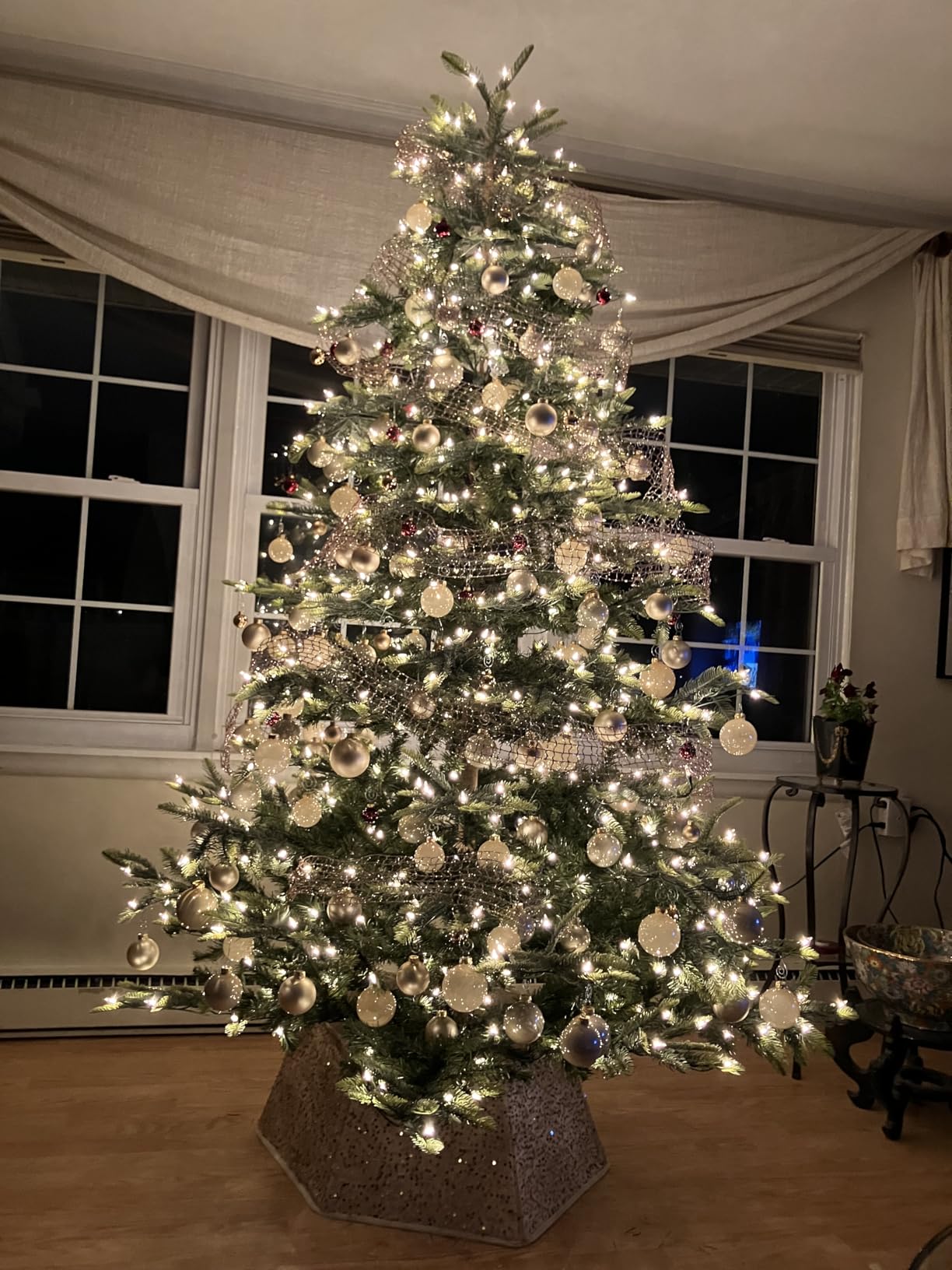
Puleo International 7.5ft Pre-Lit Aspen Fir
Pre-lit full-size tree with 700 warm white lights already distributed through the branches
$225 - $275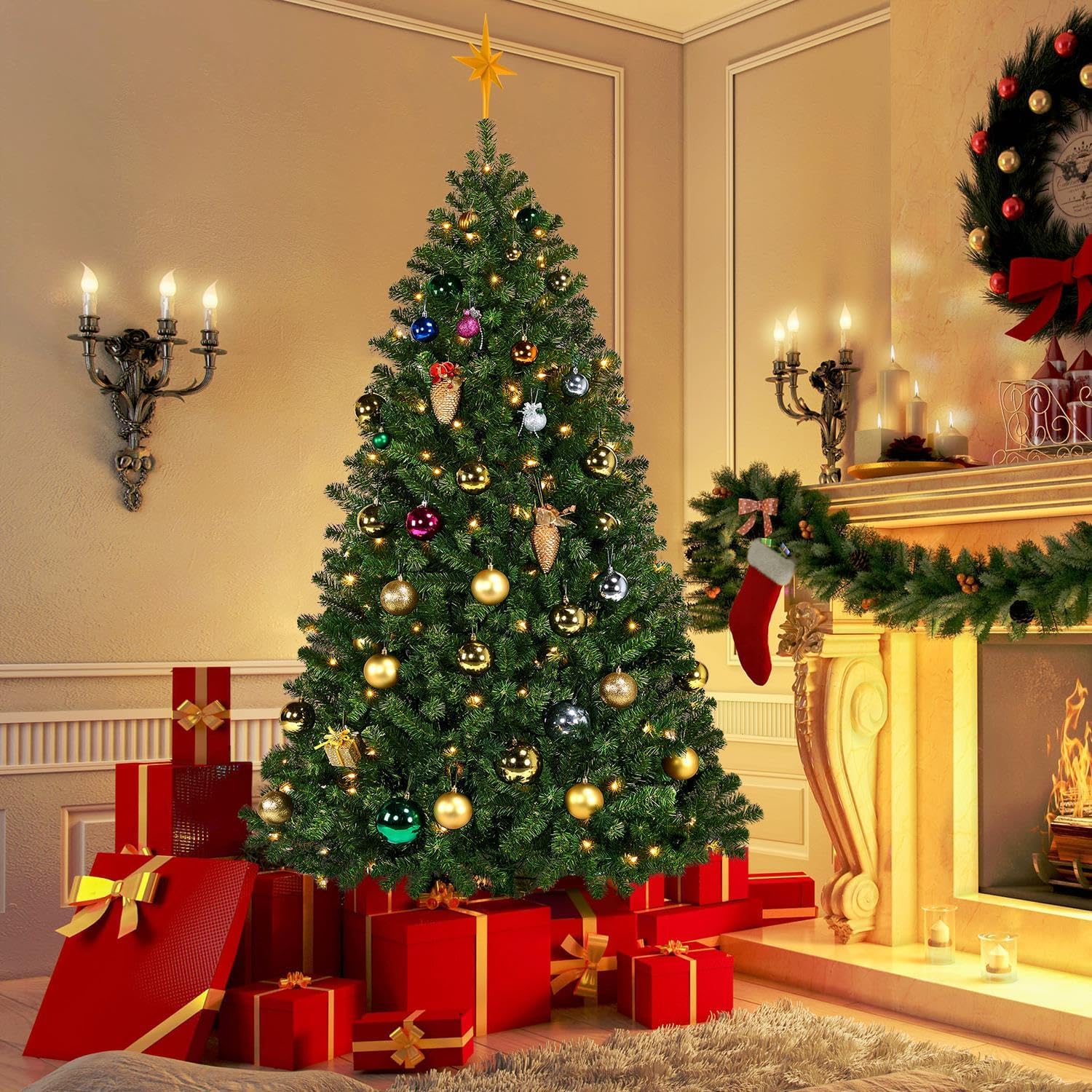
Yaheetech 6ft Pre-Lit Christmas Tree
Traditional 6-foot pre-lit tree with 300 warm white lights and a 45.5-inch diameter
$70 - $85