
Introduction
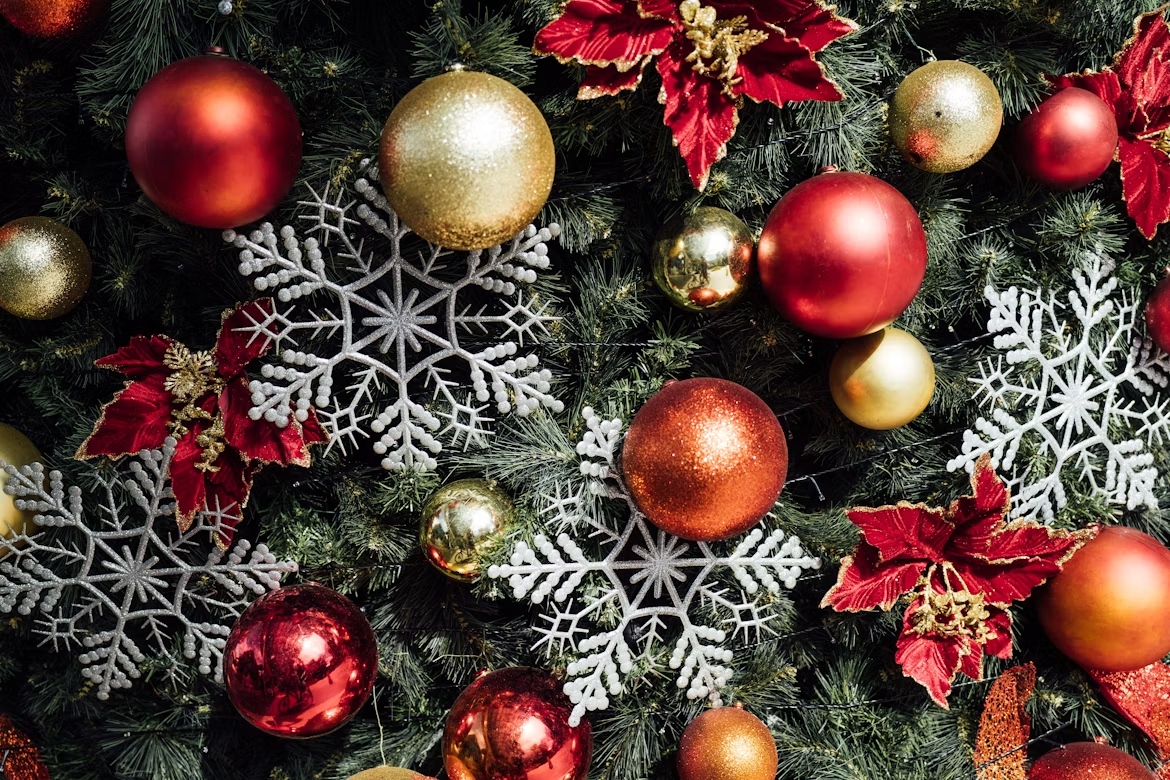
Decorating an artificial Christmas tree is one of the most enjoyable parts of the holiday season. With the right combination of lights, ornaments, ribbons, and decorative accents, you can turn a simple artificial tree into a beautiful centerpiece for your home.
But where should you start?
The key is to work in the right order. Fluff the branches first, add lights if your tree is unlit, choose a decorating theme, and then layer your ornaments and finishing touches.
Whether you have a small tabletop tree or a full-size 7.5-foot Christmas tree, this guide will walk you through the process of decorating an artificial Christmas tree step by step.
1. Choose a Christmas Tree Decorating Theme
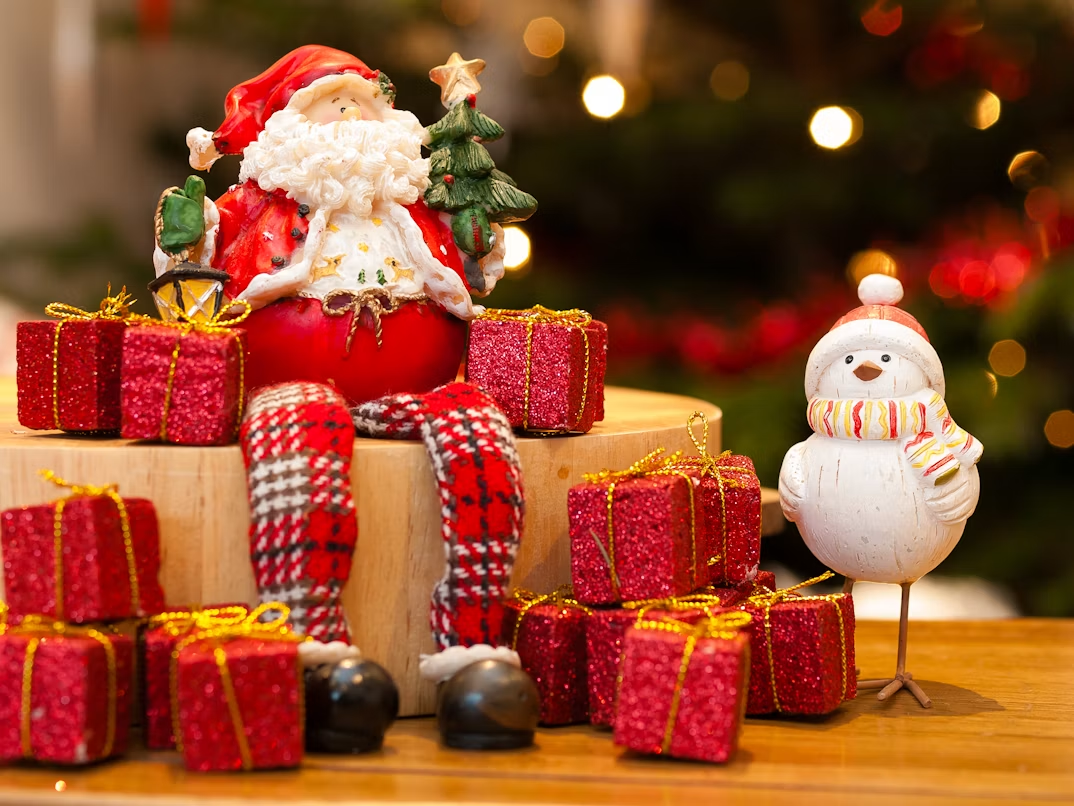
Before buying ornaments or adding decorations, decide what kind of Christmas tree you want.
A clear theme makes it easier to choose colors, coordinate decorations, and create a finished look.
Here are five popular decorating styles to consider.
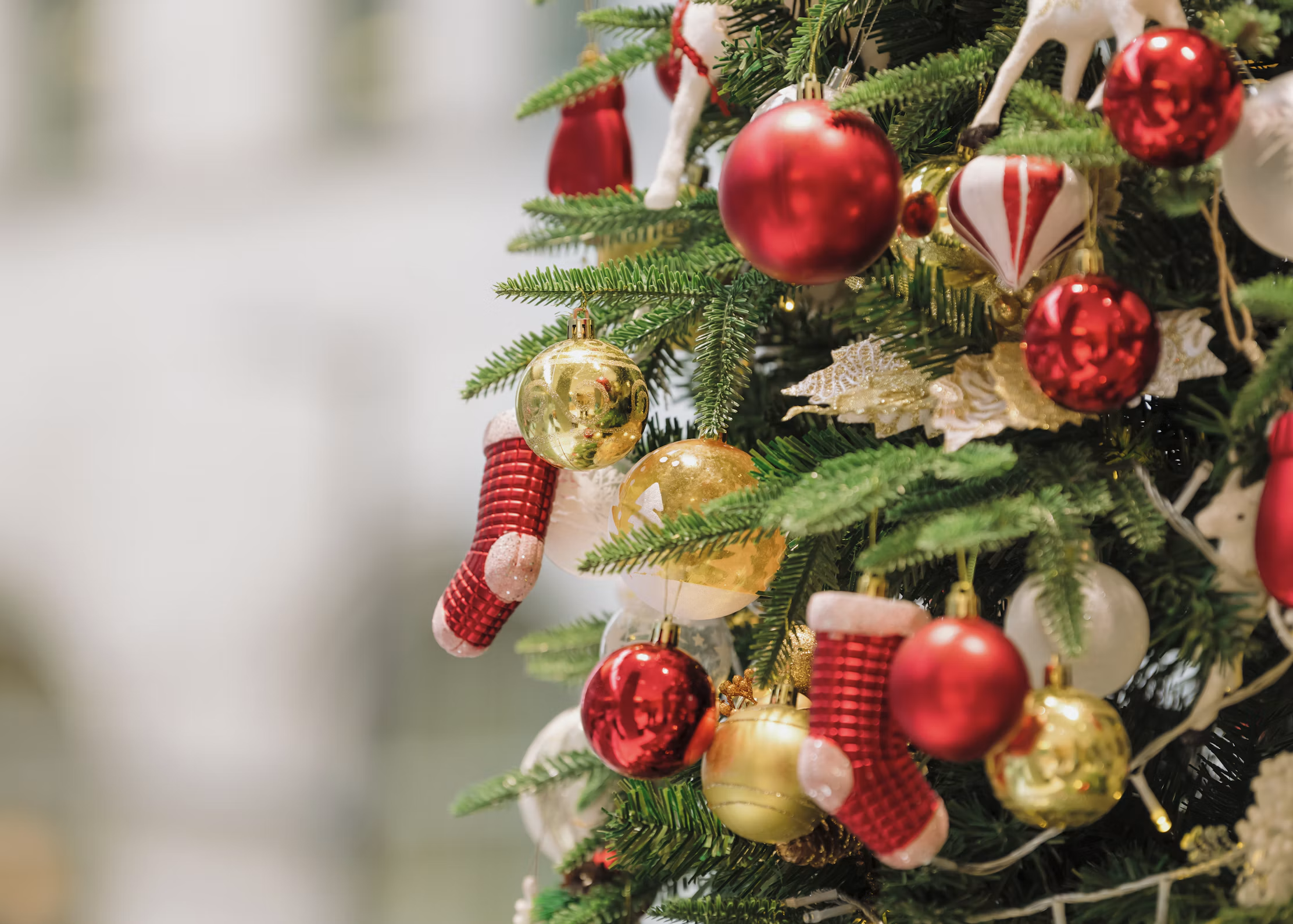
Traditional Red and Gold
Red and gold are classic Christmas colors that create a warm, festive atmosphere.
Consider using:
- Red Christmas baubles
- Gold ornaments
- Warm white lights
- Gold ribbon
- Traditional decorative picks
This style works well with a traditional green artificial Christmas tree.
Classic Green and White
A green-and-white theme creates a simple, elegant appearance.
Use white ornaments, soft white lights, and a few natural-looking decorations. You can add wooden ornaments or subtle metallic accents to keep the tree from looking too plain.
Silver and White
Silver and white decorations create a bright, winter-inspired look.
Try combining:
- Silver baubles
- White ornaments
- Clear decorative accents
- Cool white or neutral white lights
- Silver ribbon
This theme can work particularly well with modern interiors.
Natural and Rustic
A rustic Christmas tree uses natural textures and understated colors.
Consider wooden ornaments, burlap ribbon, pinecones, and warm white lights. Keep the color palette focused on brown, cream, green, and other natural tones.
Snowy Winter Theme
A flocked artificial Christmas tree already has a snow-covered appearance, making it a natural choice for a winter-themed design.
Pair it with white, silver, champagne, or pale blue ornaments. Warm white lights can add a cozy contrast to the white branches.
If you're still deciding between tree styles, see our guide to Flocked vs. Unflocked Christmas Trees.
2. Fluff the Artificial Christmas Tree
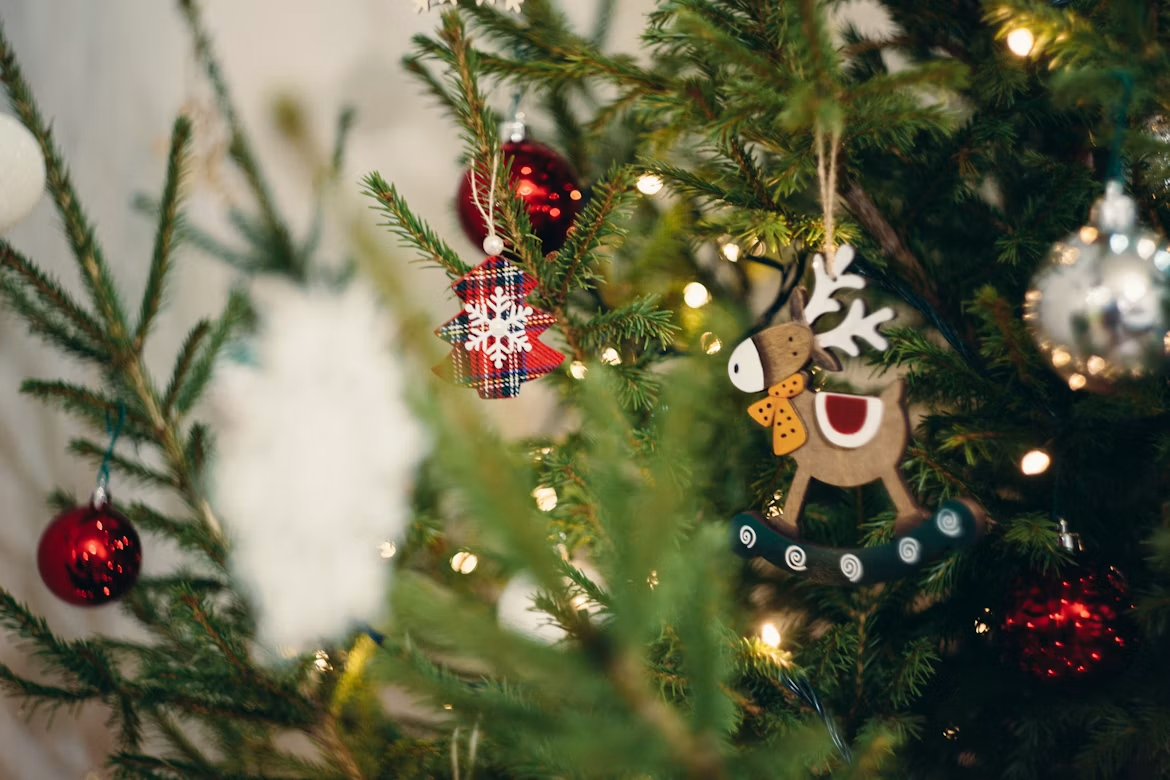
Before adding decorations, take time to shape your tree.
Artificial Christmas trees are often compressed for shipping and storage. Their branches may look sparse or uneven when first assembled.
Fluffing helps spread the branches and fill visible gaps.
How to Fluff Your Tree
- Assemble the tree according to the manufacturer's instructions.
- Start with the lowest branches.
- Separate individual branch tips and spread them outward.
- Angle some tips to the sides and others slightly upward or downward.
- Work upward through each section.
- Step back occasionally to check the overall shape.
Try to create an even silhouette rather than making every branch point in exactly the same direction.
For a fuller appearance, use the smaller inner branches to cover gaps between the larger outer branches.
If your tree still looks sparse, our guide How to Make an Artificial Christmas Tree Look Fuller can help.
3. Add Christmas Tree Lights
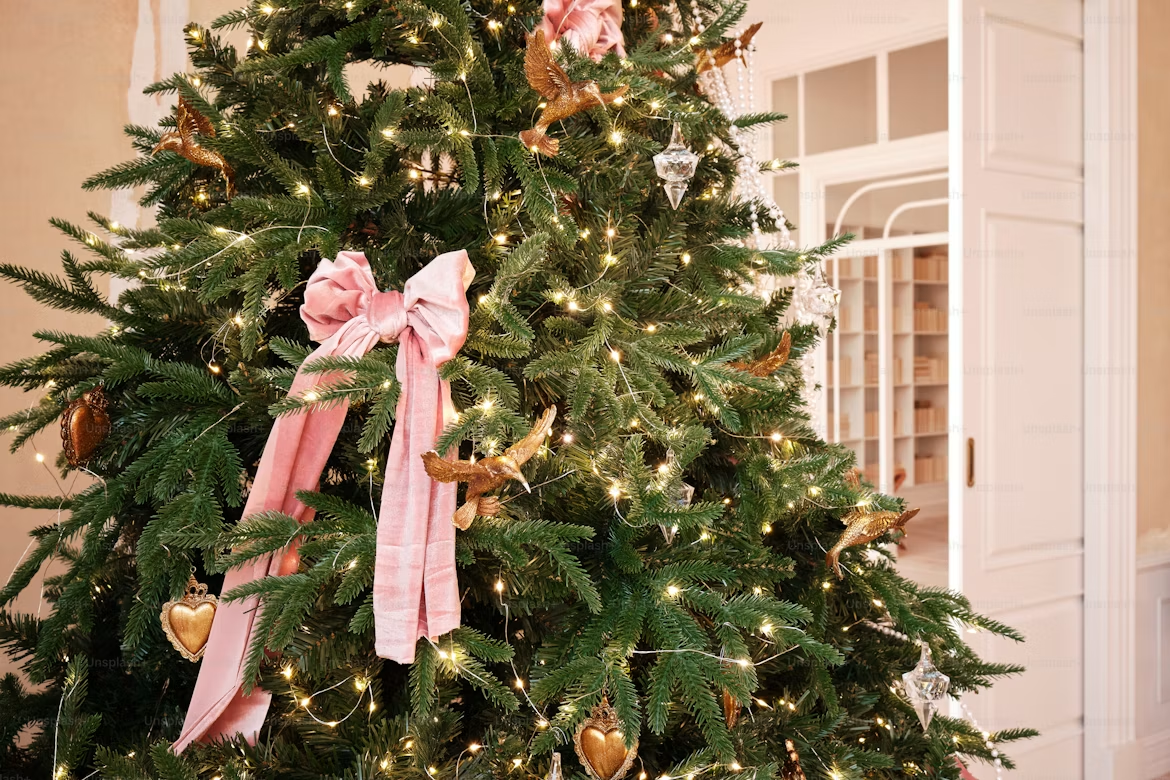
If you have an unlit artificial tree, add the lights before hanging ornaments.
This makes it easier to distribute the lights throughout the branches without knocking decorations off the tree.
How Many Lights Do You Need?
A common starting point is approximately 100 lights per foot of tree height, although the ideal amount depends on the tree's width, branch density, and your preferred brightness.
For example:
| Tree Height | Starting Point |
|---|---|
| 4.5 ft | About 450 lights |
| 6 ft | About 600 lights |
| 7.5 ft | About 750 lights |
| 9 ft | About 900 lights |
These figures are guidelines, not strict requirements. A narrow pencil tree may need fewer lights than a wide, full tree of the same height.
For a more detailed explanation, read How Many Lights Do You Need for a Christmas Tree?.
Choose the Right Light Color
The color of your lights affects the overall appearance of your decorations.
- Warm white: Creates a cozy, traditional atmosphere.
- Cool white: Produces a crisp, bright appearance.
- Multicolor: Adds a playful, colorful feel.
Try to coordinate the light color with your ornaments and decorating theme.
Distribute Lights Evenly
Avoid placing all the lights near the outer tips of the branches.
Instead, position some lights deeper inside the tree and others closer to the outside. This creates depth and helps reduce dark areas.
If your tree is pre-lit, check the existing light distribution before adding extra strings. You may already have enough illumination.
4. Add Ribbon or Garland

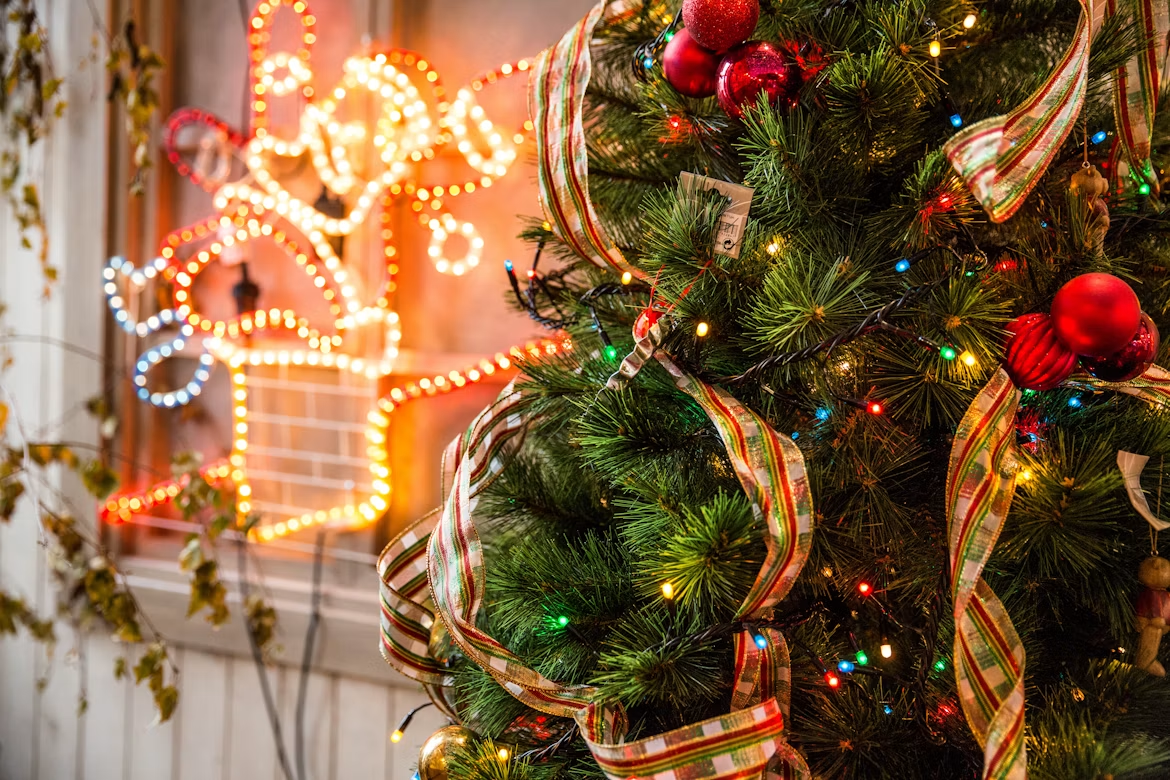
Ribbon can make a Christmas tree look fuller, more coordinated, and more visually interesting.
You can use wide fabric ribbon, mesh ribbon, metallic ribbon, or traditional Christmas garland.
Option A: Wrap Ribbon Around the Tree
Start near the top and work downward, loosely wrapping the ribbon around the tree.
Avoid pulling it too tightly. Let the ribbon follow the natural shape of the branches.
Option B: Create Vertical Ribbon Cascades
Cut ribbon into several lengths and arrange the pieces vertically from the top toward the bottom.
This approach can create a more structured appearance and makes it easier to distribute ribbon evenly.
Option C: Use Small Ribbon Loops
Create loose loops and tuck them into the branches.
This works particularly well if you want to add texture without covering too much of the tree.
How Much Ribbon Do You Need?
The amount depends on your tree's height, width, and how heavily you want to decorate it.
Rather than buying a fixed amount based only on height, start by deciding whether you want a few accent pieces or a more substantial ribbon design.
Add the ribbon gradually and step back to check the balance before using the entire roll.
5. Hang the Largest Ornaments First
One of the easiest ways to create a balanced Christmas tree is to hang the largest ornaments before adding smaller decorations.
Large ornaments establish the main visual structure and help you identify areas that need additional color or detail.
Where Should Large Ornaments Go?
Distribute them across the tree rather than grouping them all in one place.
Place some ornaments closer to the trunk and others toward the outer branches.
You can also use larger ornaments to fill noticeable gaps.
Try to distribute visual weight evenly from top to bottom.
If all the largest decorations are concentrated near the bottom, the tree may look unbalanced.
6. Add Medium and Small Ornaments
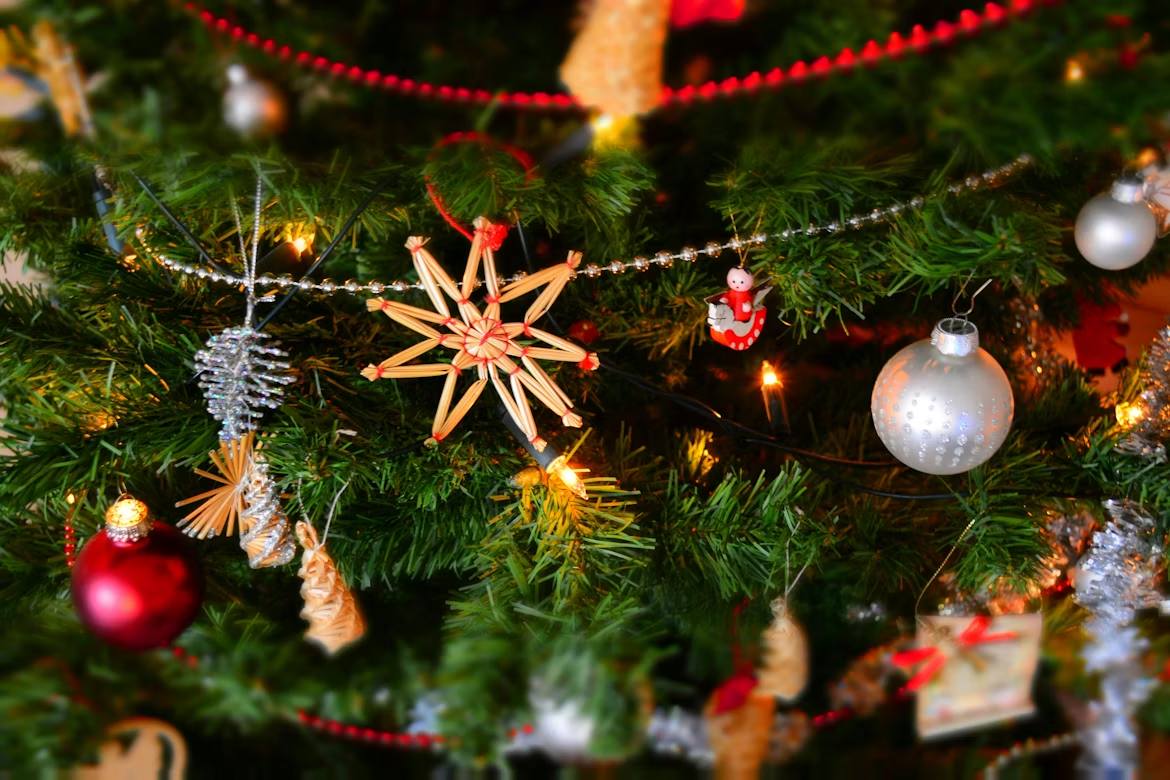
After placing the larger ornaments, fill the remaining spaces with medium and small decorations.
Use a mixture of sizes to create depth and variety.
For example:
- Large ornaments create focal points.
- Medium ornaments fill the main spaces.
- Small ornaments add detail and fill smaller gaps.
You do not need to use every ornament you own.
A tree with a consistent color palette and thoughtfully distributed decorations can look more coordinated than one covered in too many unrelated items.
Mix Different Textures
Combining different finishes can make the tree more interesting.
Try mixing:
- Shiny ornaments
- Matte ornaments
- Glittered decorations
- Textured fabric ornaments
- Wooden ornaments
- Clear or translucent decorations
Keep the colors coordinated so the variety of textures does not make the tree look cluttered.
7. Decorate the Inside of the Tree
Decorations do not all need to hang from the outermost branches.
Placing some ornaments deeper inside the tree can create a sense of depth.
This works especially well with artificial trees that have dense branches.
Smaller ornaments are often useful for this purpose.
You can also place a few decorations near the trunk where they can be seen through gaps in the outer branches.
The goal is to create several layers rather than a flat surface of decorations.
8. Add Decorative Picks and Natural Accents
Decorative picks can add height, texture, and color to your tree.
Popular choices include:
- Berry picks
- Pinecone picks
- Artificial branches
- Metallic sprays
- Snow-covered decorative stems
- Floral accents
Use them sparingly at first.
Place a few picks around the tree, then add more only if the design needs additional detail.
If you are decorating a flocked tree, white or silver picks can blend into the snowy appearance, while red berries or natural pinecones can provide contrast.
9. Choose a Tree Topper
A tree topper gives the design a clear finishing point.
Popular options include:
- Traditional stars
- Angels
- Large bows
- Decorative floral arrangements
- Oversized ornaments
Choose a topper that suits the size and style of your tree.
A very large topper may overwhelm a small tabletop tree, while a small topper may be difficult to notice on a tall, full-size tree.
Consider the Tree's Shape
A traditional full tree can usually accommodate a variety of toppers.
A pencil tree has a narrower top, so a lighter or more compact topper may be easier to position securely.
Before placing the topper, check that the top branch can support it. Follow the manufacturer's guidance and avoid forcing a heavy decoration onto a branch that is not designed to hold it.
10. Decorate the Base of the Tree
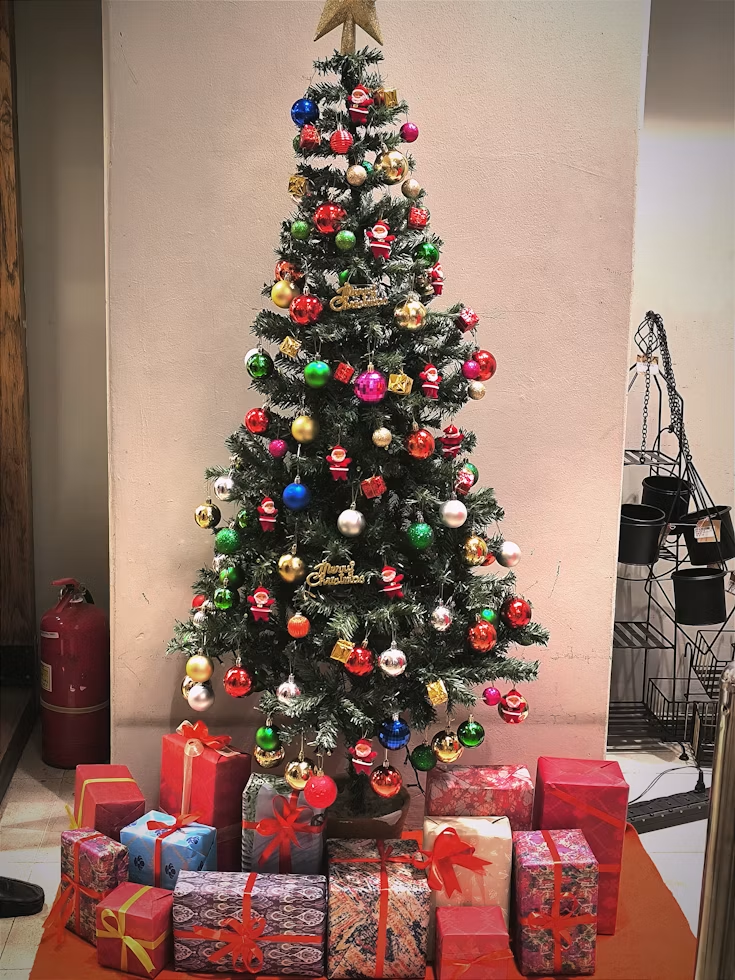
The area around the bottom of the tree is often overlooked.
A tree skirt or collar can make the display look more finished while concealing the stand.
Tree Skirts
A fabric tree skirt creates a soft, traditional appearance.
Popular choices include red, white, cream, plaid, and faux fur.
Tree Collars
A tree collar creates a more structured look.
Options include woven baskets, metal collars, and wooden designs.
Choose a base covering that fits around the stand without interfering with the tree's stability.
You can also place a few wrapped empty boxes or decorative gift boxes around the base to complete the display.
11. Make the Tree Look Fuller
If your artificial Christmas tree looks sparse after decorating, there are several ways to improve its appearance.
Adjust the Branches
Before adding more decorations, check whether the branches have been fully separated and shaped.
Sometimes a tree looks thin simply because the branches remain compressed.
Fill Visible Gaps
Use larger ornaments, ribbon, or decorative picks to draw attention away from noticeable gaps.
Try not to place all the decorations on the outer tips. A layered arrangement can make the tree appear more substantial.
Use Consistent Lighting
Dark areas can make a tree look less full.
If your tree is unlit, adjust the light distribution before adding more ornaments.
If it is pre-lit, check whether the lights are evenly distributed throughout the branches.
Avoid Overloading One Area
Adding too many decorations to a single section can make the rest of the tree look empty.
Step back regularly and distribute ornaments, ribbon, and picks across the entire tree.
12. Decorate a Small Artificial Christmas Tree
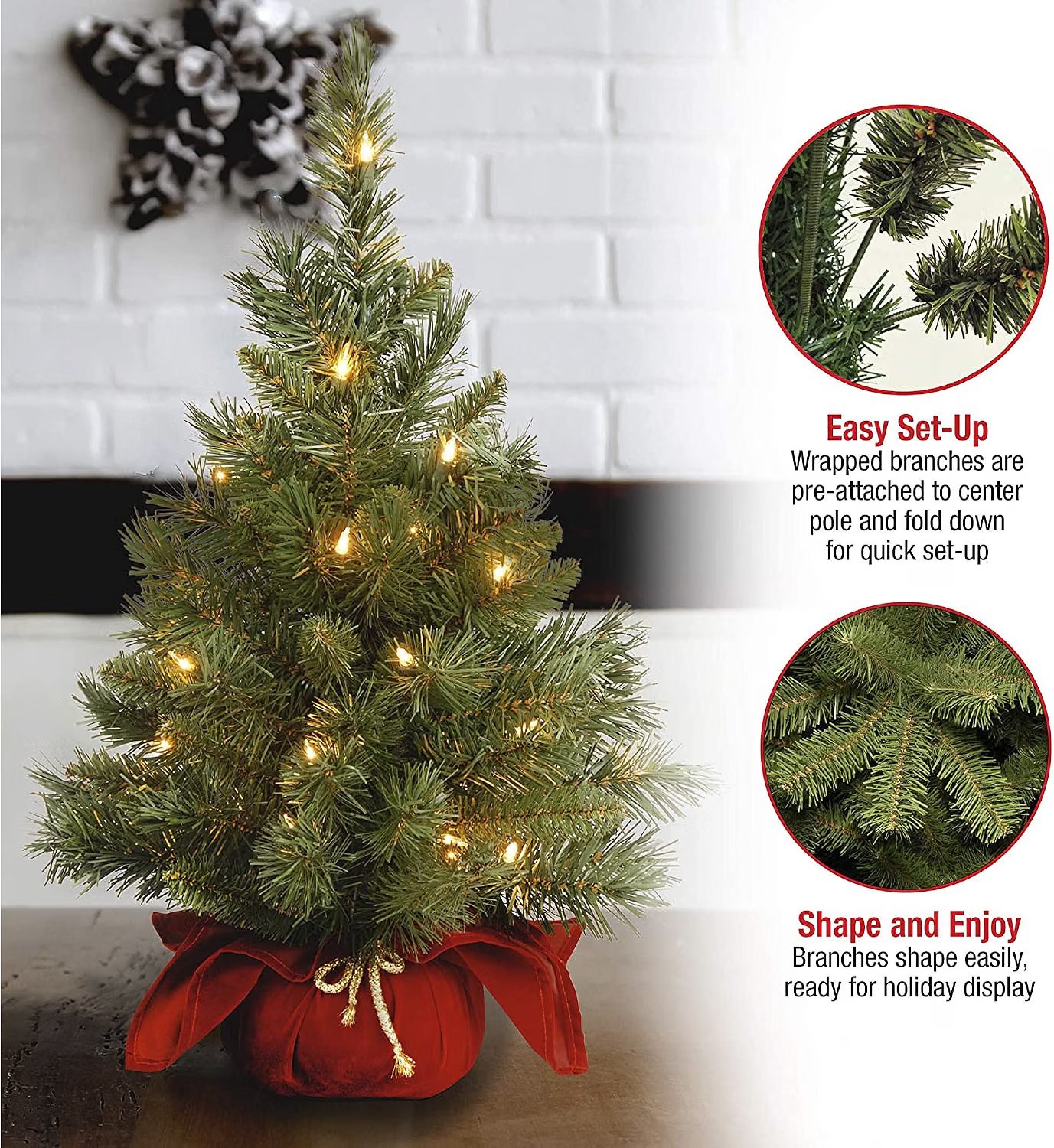
Small trees require a slightly different approach.
A 2-foot or 3-foot tabletop tree may not have enough space for large ornaments, wide ribbon, and a substantial topper.
Instead, use a smaller selection of decorations.
Consider:
- Miniature ornaments
- Thin ribbon
- Small bows
- A compact topper
- A simple tree base
For a small tree, choosing a clear theme is especially helpful because every decoration is more noticeable.
If you're decorating a compact space, see Best Small Christmas Trees for Apartments and Small Spaces.
13. Decorate a Large Artificial Christmas Tree
A 7.5-foot or 9-foot tree gives you more room to create a layered design.
However, larger trees also require more decorations to maintain visual balance.
Before you begin, make sure you have enough space to move around the tree safely.
A useful approach is to decorate in stages:
- Shape the branches.
- Add lights if needed.
- Add ribbon or garland.
- Place large ornaments.
- Fill gaps with smaller ornaments.
- Add decorative picks.
- Install the topper.
- Finish the base.
For tall trees, use a stable ladder or suitable equipment when necessary. Avoid standing on chairs or unstable furniture.
14. Common Christmas Tree Decorating Mistakes
Using Too Many Colors
A wide range of colors can make a tree look busy.
Choose a main palette and use a smaller number of accent colors.
Hanging Every Ornament on the Outer Branches
This can make the tree look flat.
Place some decorations deeper inside the branches to create depth.
Decorating Before Fluffing
Compressed branches can leave gaps that become harder to fix after the ornaments are installed.
Shape the tree first.
Using Too Much Ribbon
Ribbon can add visual interest, but too much may hide the branches and ornaments.
Add it gradually and check the overall balance.
Forgetting the Tree's Proportions
A large topper, oversized ornaments, or wide ribbon may overwhelm a small tree.
Choose decorations that suit the height and width of your tree.
Ignoring the Tree Base
A visible stand can make an otherwise beautiful tree look unfinished.
A suitable tree skirt or collar can help complete the display.
15. A Simple Christmas Tree Decorating Checklist
Use this checklist as you decorate.
- Choose a decorating theme.
- Assemble the tree securely.
- Fluff and shape the branches.
- Add lights if the tree is unlit.
- Check the light distribution.
- Add ribbon or garland.
- Hang the largest ornaments.
- Fill spaces with medium and small ornaments.
- Add decorative picks or natural accents.
- Install the tree topper.
- Cover the stand with a tree skirt or collar.
- Step back and make final adjustments.
16. Final Thoughts
Decorating an artificial Christmas tree does not require a large collection of expensive ornaments.
The most important things are a well-shaped tree, a coordinated color palette, balanced lighting, and decorations arranged in layers.
Start with the basics, then add details gradually.
For a traditional look, try red and gold ornaments with warm white lights. For a modern style, consider silver and white decorations. For a winter-inspired design, a flocked tree paired with white and metallic accents can create a cohesive appearance.
Most importantly, decorate in a way that suits your home and the Christmas atmosphere you want to create.
A thoughtfully decorated artificial Christmas tree can become a beautiful centerpiece for the holiday season year after year.
Related Christmas Tree Guides
How to Choose an Artificial Christmas Tree: A Complete Buying Guide
Learn how to compare Christmas tree height, width, materials, lighting, branch tips, shape, price, and other important features.
Artificial Christmas Tree Size Guide
See a broader breakdown of Christmas tree sizes from mini and tabletop trees to 6-foot, 7.5-foot, and 9-foot options.
How Many Lights Do You Need for a Christmas Tree?
Use the 100-lights-per-foot guideline to estimate how many lights your tree needs and how to distribute them.
Pre-Lit vs. Unlit Christmas Trees
Compare the convenience and flexibility of pre-lit and unlit Christmas trees.
Best Small Christmas Trees for Apartments and Small Spaces
Explore smaller Christmas tree options for apartments and other rooms where floor space is limited.
Related Products
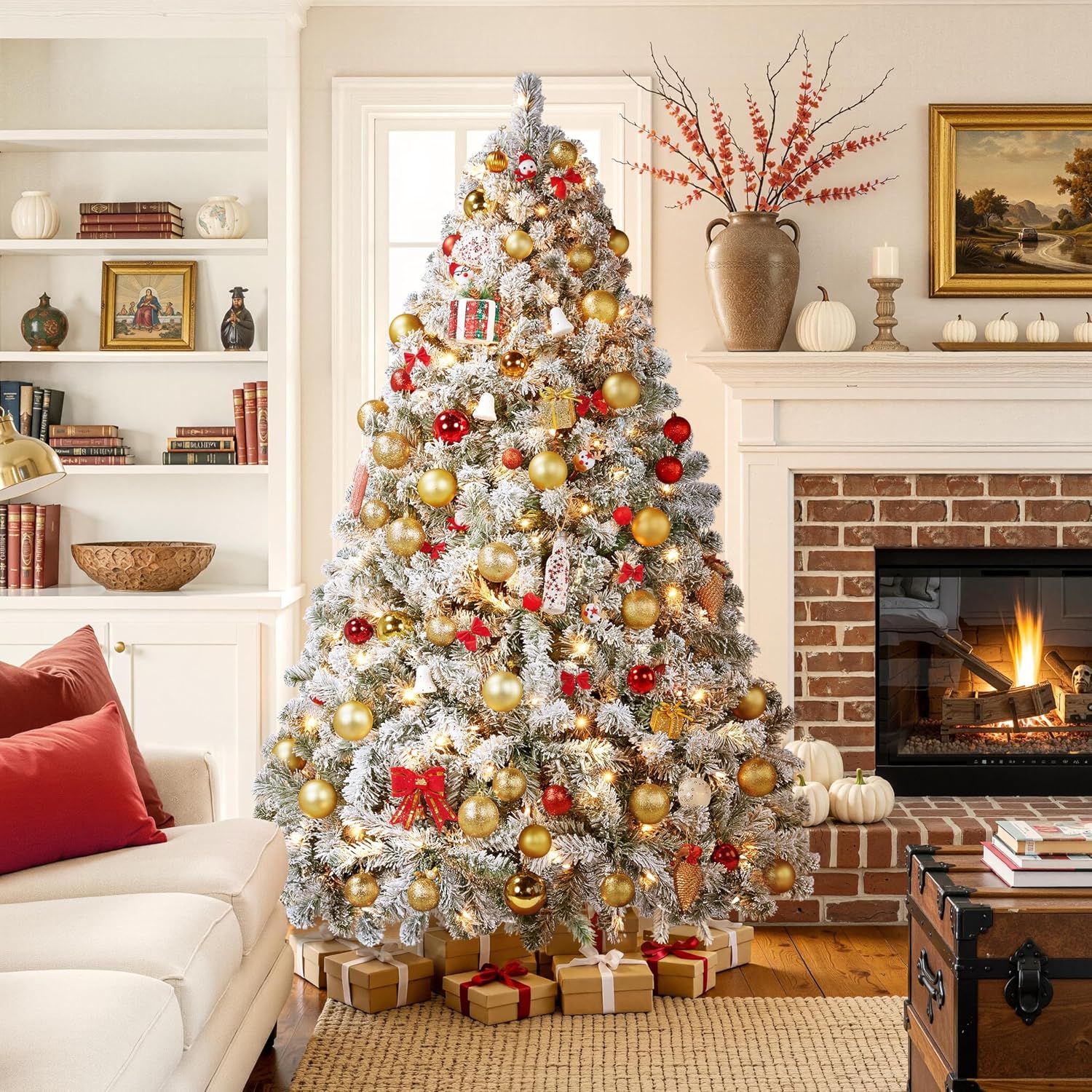
Yaheetech 6ft Pre-Lit Snow Flocked Artificial Christmas Tree
Snow-flocked 6-foot pre-lit tree with 250 warm white lights for a winter-themed design
$70 - $90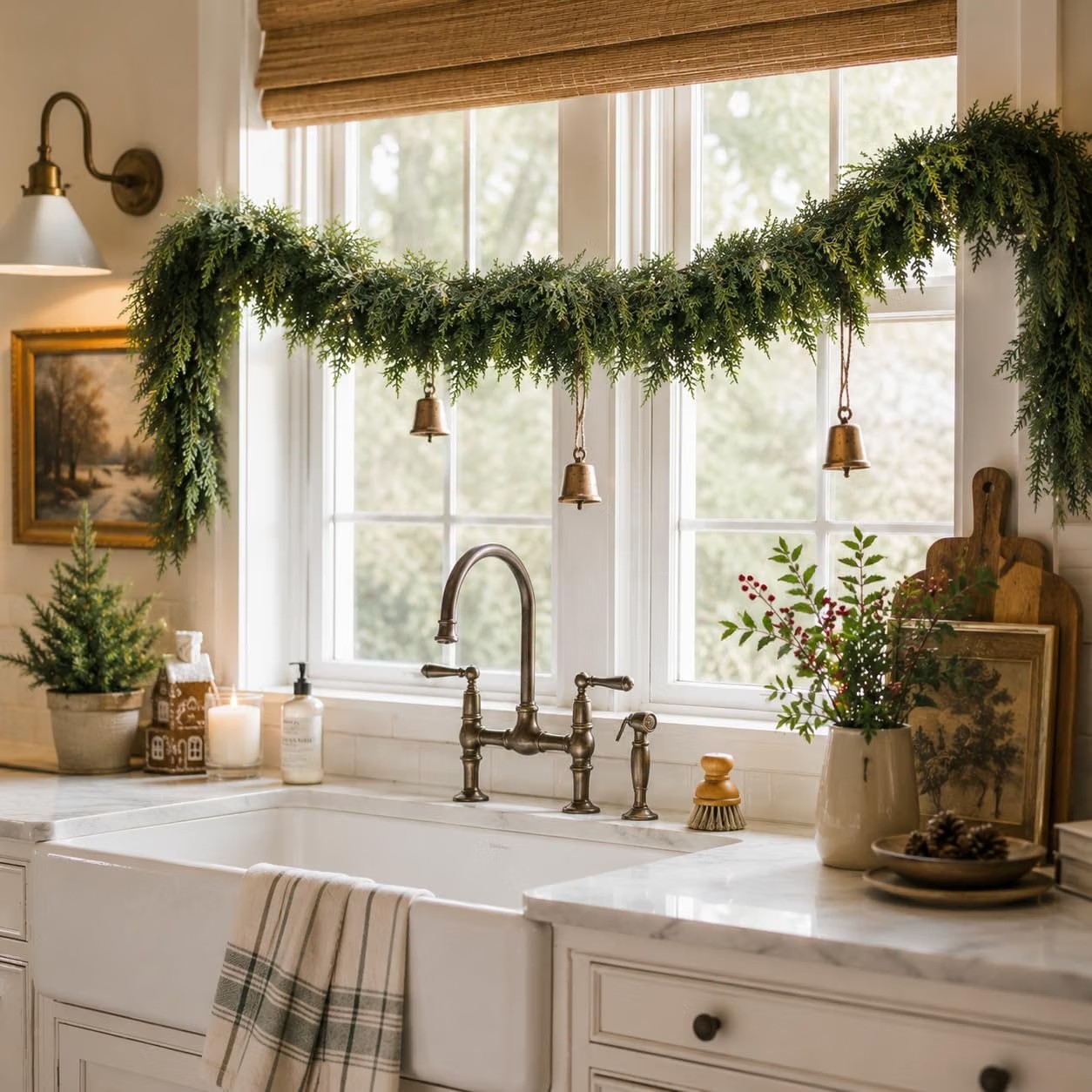
Senjie 9FT Christmas Cedar Garland
Real-touch 9-foot cedar garland for tree bases, mantles, staircases, and doorways
$30 - $45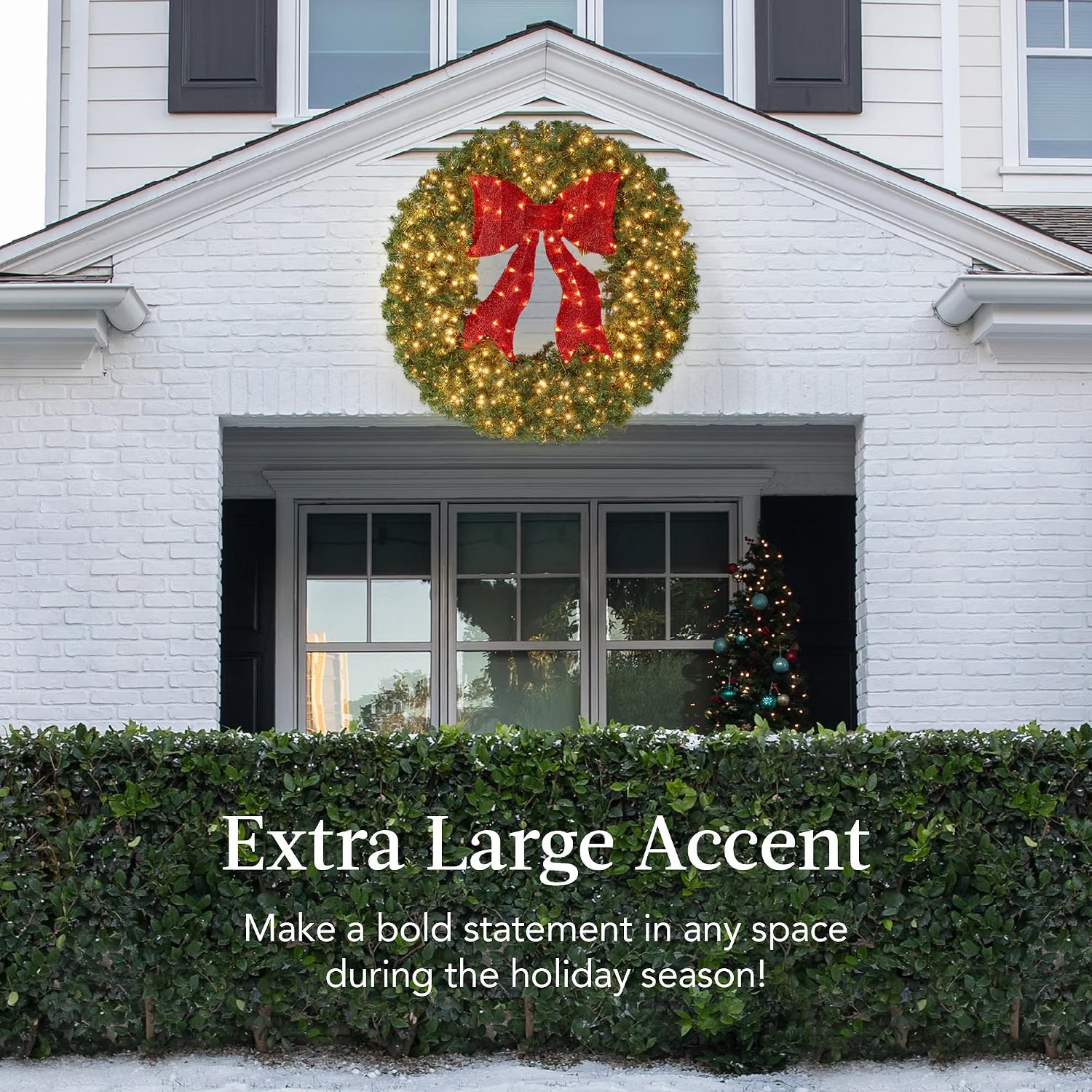
Best Choice Products 60in Pre-Lit Fir Christmas Wreath
60-inch pre-lit artificial fir wreath that coordinates with a decorated Christmas tree
$50 - $60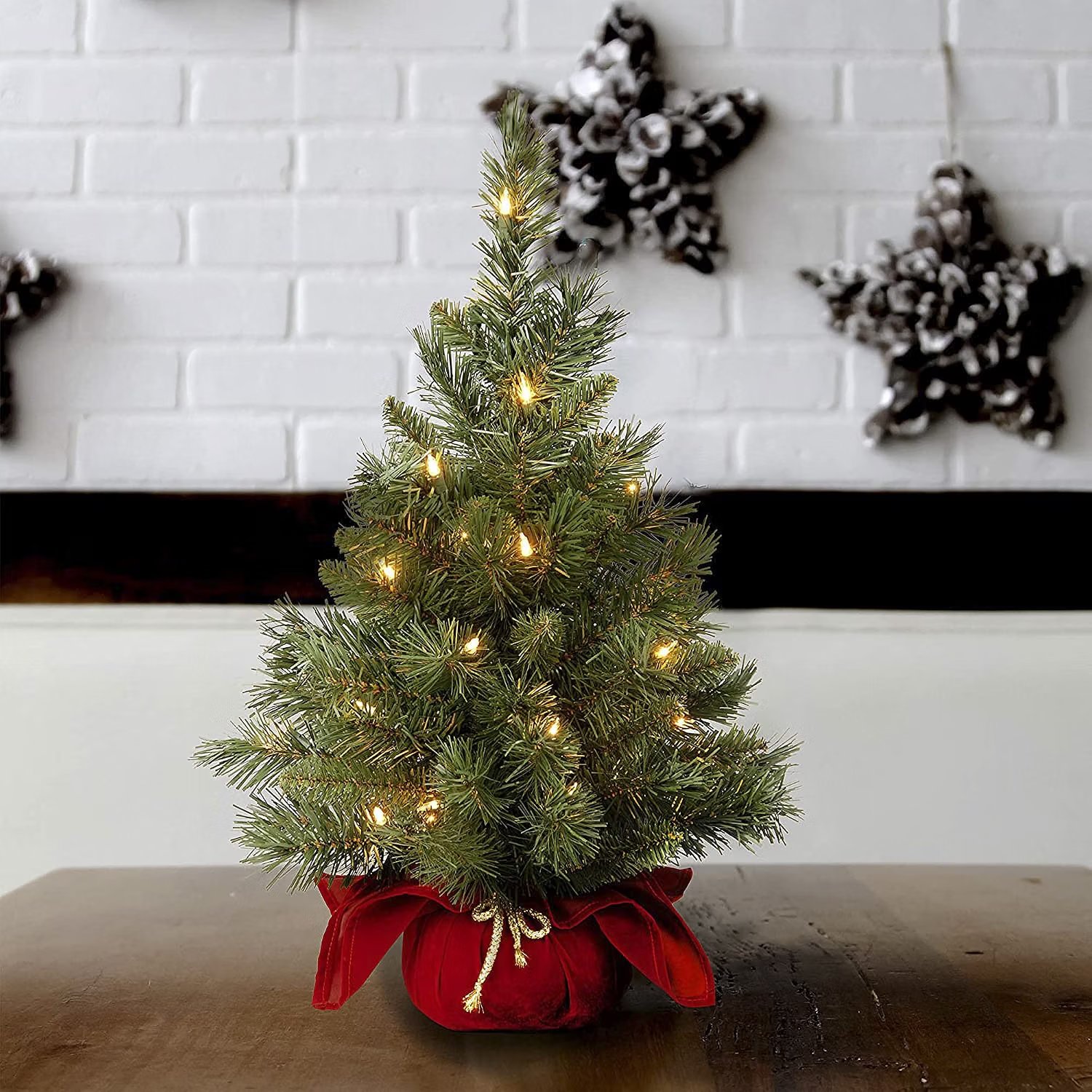
National Tree Company 24in Pre-Lit Majestic Fir Mini Tree
24-inch tabletop pre-lit mini tree with 35 lights for desks, tables, and small spaces
$25 - $35