

Introduction
Choosing an artificial Christmas tree involves more than picking the right height, shape, and lighting. The material used to make its branches can also affect how realistic the tree looks, how much it costs, and how it fits your decorating style.
Two of the most common materials are PVC and PE. Some artificial Christmas trees use PVC foliage throughout, while others combine PVC and PE to balance appearance and price.
So, which is better: PVC or PE?
PVC Christmas trees are generally more affordable, while PE Christmas trees often have more realistic-looking needles. However, the best choice depends on the tree's overall design, branch construction, budget, and how realistic you want it to look.
In this guide, we'll explain the differences between PVC and PE Christmas trees, compare their advantages and disadvantages, and show you what to look for when shopping.
Quick Answer: PVC vs. PE Christmas Trees
- PVC: Usually more budget-friendly, with foliage made from thin plastic film strips. It can create a full-looking tree at an accessible price.
- PE: Uses molded plastic needles designed to resemble the shape and texture of natural evergreen branches. It often provides a more realistic appearance.
- PVC and PE combination: Uses both materials, often placing molded PE tips on visible outer branches and PVC foliage in the interior to balance realism, fullness, and cost.
Neither material automatically makes a tree the best choice. Branch density, color, shape, construction quality, and how carefully the branches are arranged also influence the final appearance.
What Is a PVC Christmas Tree?
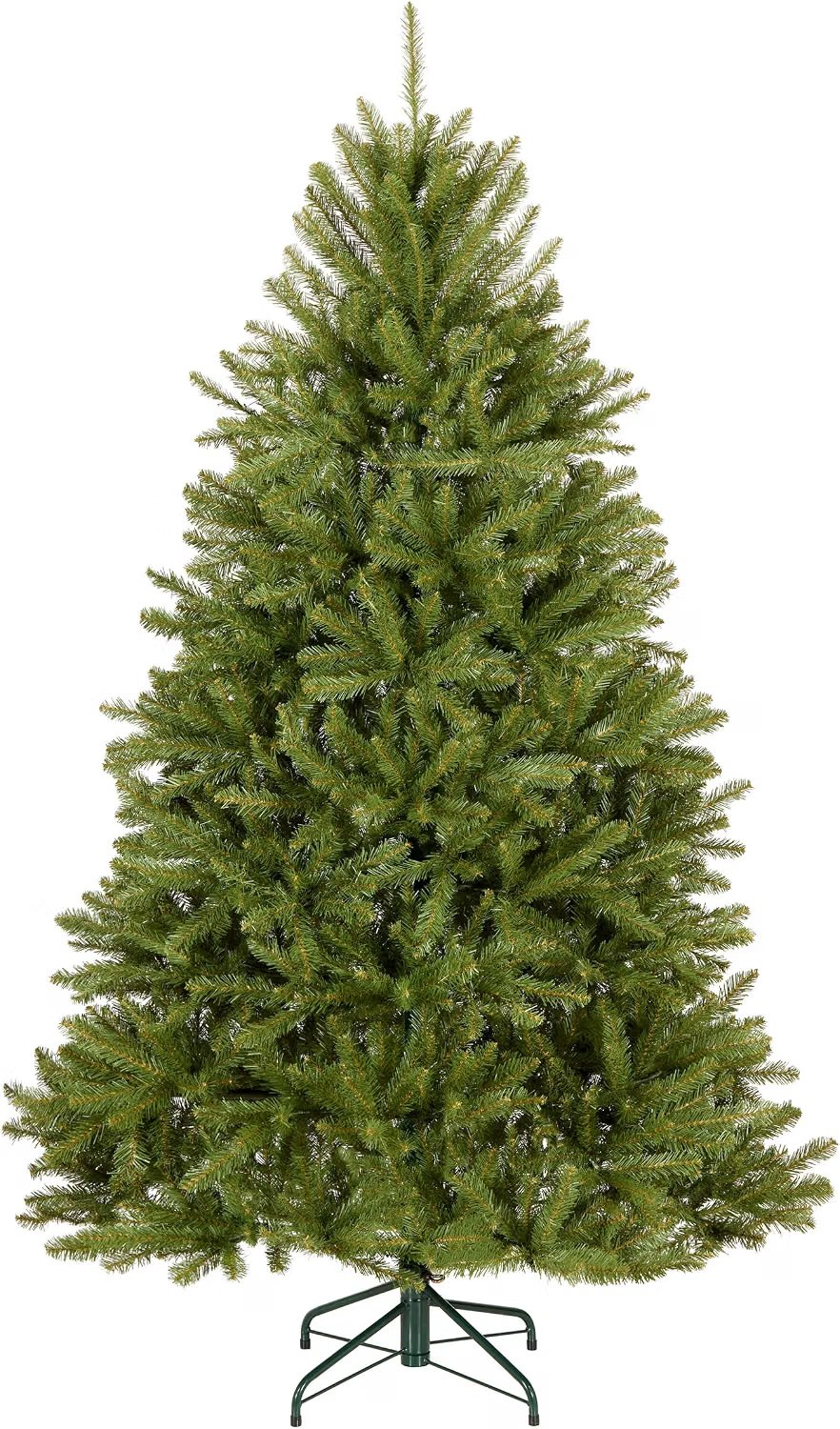
PVC stands for polyvinyl chloride, a plastic commonly used in artificial Christmas tree foliage.
PVC foliage is typically made by cutting thin plastic film into narrow strips and attaching them to the tree's branches. These strips form the familiar flat, layered needles found on many traditional artificial trees.
Advantages of PVC Christmas Trees
1. Generally Lower Cost
PVC trees are often an affordable option for shoppers who want a seasonal decoration without spending a large amount. They can be especially practical for first-time homeowners, guest rooms, offices, or families who prefer to spend more of their budget on ornaments and lights.
2. Can Create a Full Appearance
PVC branches can provide plenty of visual coverage, depending on how many tips the tree has and how its branches are arranged. A well-shaped PVC tree can look attractive once it has been fluffed and decorated.
3. Many Styles and Sizes
PVC foliage is used in a wide range of artificial trees, from compact tabletop models to full-size Christmas trees. It is also common in unlit and pre-lit designs.
4. Works Well for Decorative Displays
If your tree will be covered with ornaments, ribbon, garland, and other decorations, you may not need every branch to look highly realistic up close. A PVC tree can be a practical choice for this type of display.
Disadvantages of PVC Christmas Trees
1. Needles May Look Less Natural Up Close
PVC needles are generally flat strips rather than individually molded, three-dimensional shapes. Depending on the design, they may look more obviously artificial when viewed closely.
2. Branch Arrangement Matters
Some PVC trees can look sparse or uneven before shaping. Opening each branch and arranging the tips takes time, especially if the tree has been tightly packed for storage.
3. Appearance Varies by Product
Not all PVC trees look alike. Needle color, tip count, branch structure, and manufacturing quality all affect how convincing the tree looks.
Who Should Choose a PVC Christmas Tree?
A PVC tree may be a good fit if you:
- Want to keep the purchase price relatively low.
- Prefer a traditional, full-looking Christmas tree.
- Plan to use plenty of ornaments and other decorations.
- Need a tree for a guest room, office, or secondary living space.
- Care more about overall appearance from a normal viewing distance than close-up needle realism.
What Is a PE Christmas Tree?
PE stands for polyethylene, another type of plastic used in artificial Christmas tree foliage.
PE needles are commonly made using molds shaped to resemble natural evergreen needles and branch sections. This process can produce more three-dimensional foliage than the flat strips typically used for PVC branches.
PE is often associated with more realistic artificial Christmas trees, although the result depends on the mold design, color, branch arrangement, and quality of the finished product.
Advantages of PE Christmas Trees
1. More Realistic-Looking Foliage
Molded PE tips can reproduce the shape and depth of natural evergreen branches more closely than conventional flat PVC strips. This can make a tree look more convincing, particularly on its visible outer branches.
2. Natural-Looking Branch Structure
Some PE trees have more detailed branch shapes and varied needle arrangements. These features can help the tree look less uniform.
3. Attractive in Minimally Decorated Rooms
If you prefer a simple tree with only a few ornaments, the foliage itself becomes more noticeable. A realistic-looking PE tree may suit this style particularly well.
4. Useful for Close-Up Displays
For trees placed in prominent living areas, entryways, or rooms where guests can see the branches from nearby, molded PE foliage can offer a more natural appearance.
Disadvantages of PE Christmas Trees
1. Often Costs More
PE foliage generally requires more specialized molding and construction than conventional PVC strips. Trees with substantial PE content often sit at a higher price point, although actual prices vary widely.
2. Realism Is Not Guaranteed
A tree made with PE is not automatically realistic. Poor color choices, repetitive branch shapes, an unusual silhouette, or sparse construction can still make it look artificial.
3. The Tree May Still Need Careful Shaping
PE tips do not eliminate the need to arrange the branches after unpacking. A tree can look very different before and after its branches are opened and positioned.
Who Should Choose a PE Christmas Tree?
A PE tree may be worth considering if you:
- Prioritize realistic-looking needles.
- Want the foliage to look attractive with relatively few ornaments.
- Plan to display the tree in a prominent living space.
- Are comfortable paying more for the appearance you prefer.
- Want to examine the tree's branch shape and texture closely before buying.
PVC vs. PE Christmas Trees: Key Differences
| Feature | PVC Christmas Trees | PE Christmas Trees |
|---|---|---|
| Foliage construction | Typically flat plastic film strips | Typically molded, three-dimensional tips |
| Overall appearance | Can look full and decorative | Often more natural-looking |
| Close-up realism | Usually less realistic than well-designed molded tips | Often more realistic, depending on construction |
| Typical price | Often more affordable | Often more expensive |
| Visual fullness | Depends on tip count and branch arrangement | Depends on design and branch density |
| Setup | Requires branch shaping and fluffing | Also requires branch shaping and fluffing |
| Best suited for | Budget-conscious shoppers and decorated displays | Shoppers prioritizing realistic foliage |
These are general tendencies, not absolute rules. Always compare the actual trees rather than choosing based on the material label alone.
Are PVC and PE Christmas Trees Durable?
Durability is a common concern when buying an artificial Christmas tree that you expect to use for several holiday seasons.
However, it is difficult to determine a tree's lifespan from the foliage material alone.
The quality of the branches, hinges, center pole, stand, connectors, and lighting system can all affect how well a tree holds up over time.
A well-made PVC tree may serve you well for many seasons, while a poorly constructed tree containing PE foliage may still have problems with loose connections, weak branches, or unreliable lights.
When evaluating durability, look for:
- A stable stand and secure trunk connections.
- Strong branch hinges that move smoothly.
- Branches that hold their shape without excessive sagging.
- Clear instructions for assembly and storage.
- A stated manufacturer warranty.
- Customer feedback about repeated seasonal use, not just first impressions.
If the tree is pre-lit, pay attention to the warranty for the lights as well as the tree itself. These may have different coverage periods.
What Is a Mixed PVC and PE Christmas Tree?
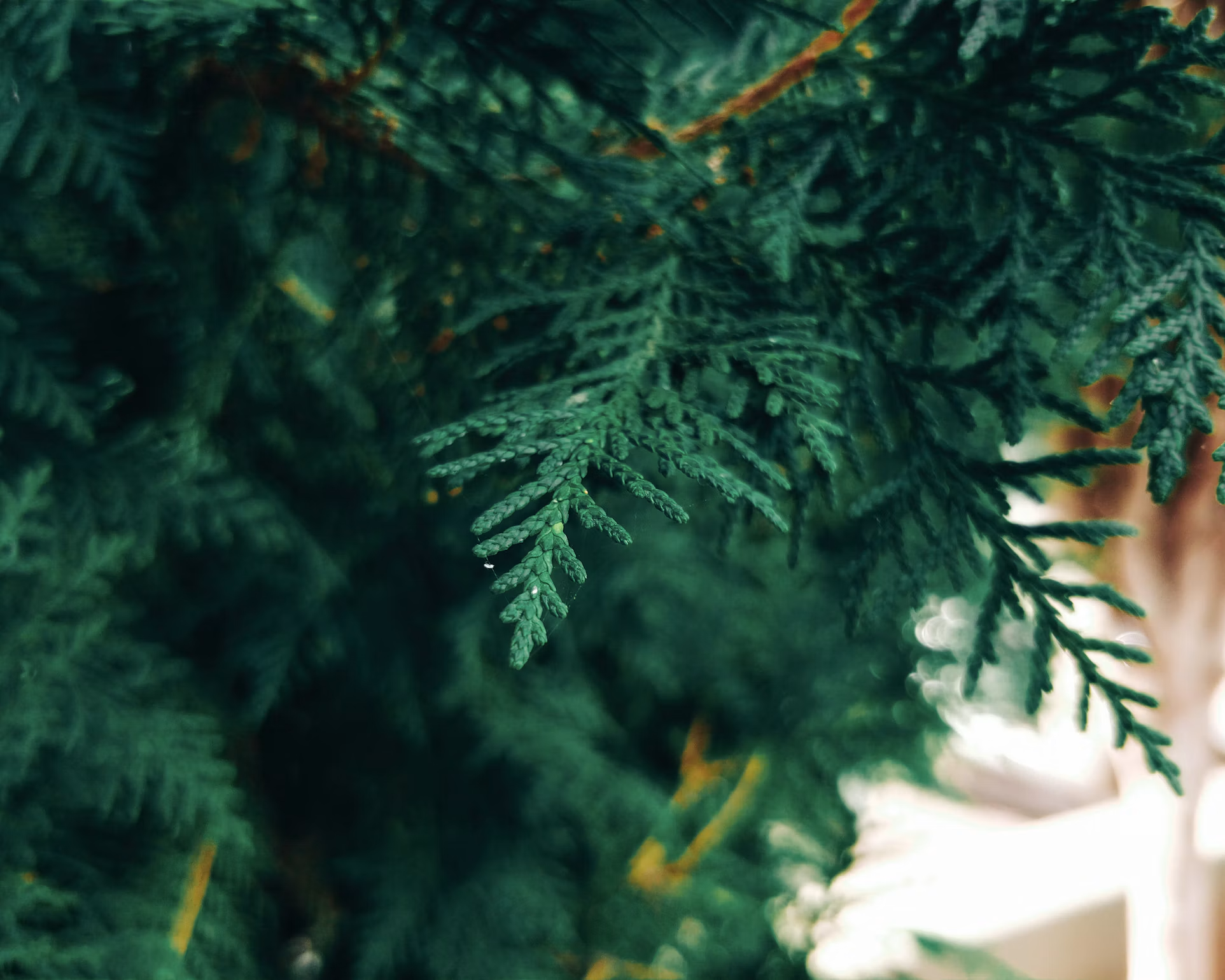
Many artificial Christmas trees combine PVC and PE rather than using only one material.
A common construction approach is to use molded PE tips on visible outer branches and PVC foliage in less visible interior areas. The PE tips provide a more natural-looking surface, while the PVC foliage helps fill out the tree.
The exact arrangement varies by manufacturer and model, so don't assume every mixed-material tree uses the same construction.
Why Choose a Mixed PVC and PE Tree?
A mixed-material tree can offer several advantages:
- A balance of realism and cost: It may look more natural than a comparable all-PVC tree without the price of a predominantly PE model.
- A fuller interior: PVC foliage can help fill spaces behind the visible branch tips.
- More decorating flexibility: A fuller structure may provide useful places to attach ornaments, depending on branch strength and spacing.
The key question is how much of the visible foliage is molded PE and how convincing the overall shape looks.
A product listing that says "PE and PVC" does not necessarily tell you the proportion of each material. If the manufacturer does not provide that information, avoid assuming the tree contains a particular percentage of PE.
Which Looks Fuller: PVC or PE?
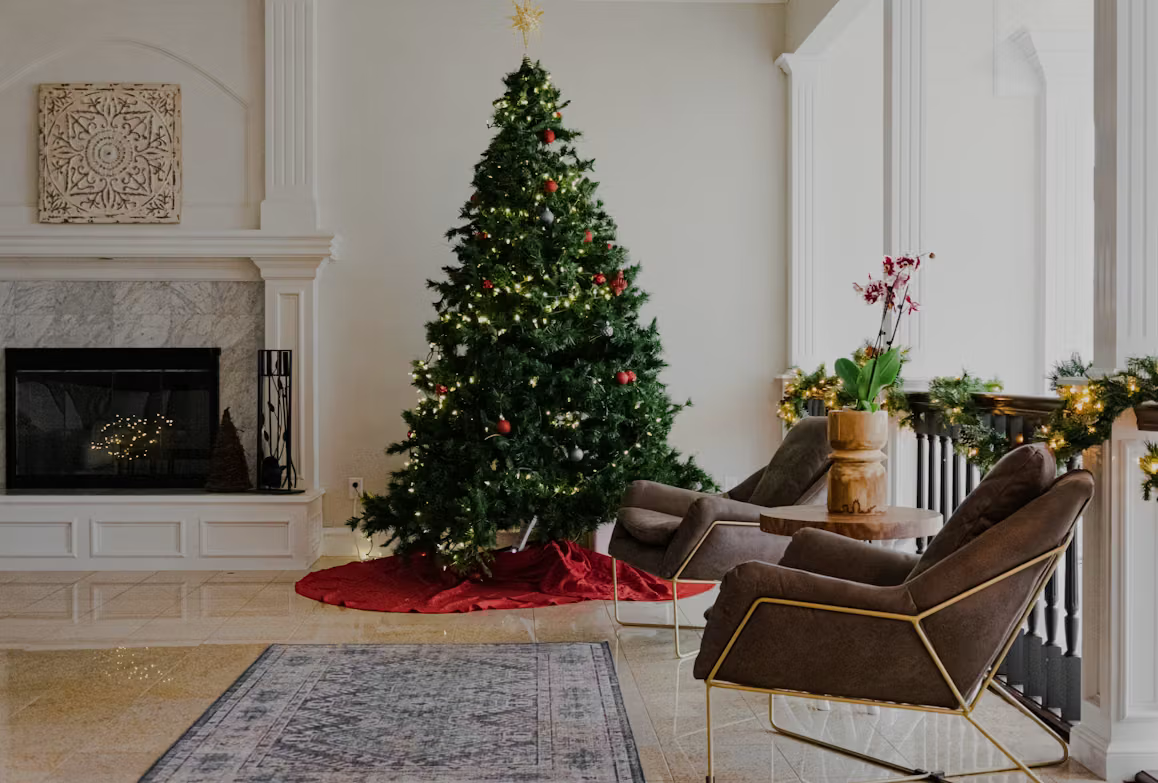
This depends on what you mean by "full."
A tree may look full because it has dense foliage and few visible gaps. Another may look full because its branches have a natural, layered shape. These are related but different qualities.
PVC foliage can help create visual coverage, especially when the tree has plenty of tips and is shaped carefully. PE branches can add realistic depth and texture, but a tree with sparse branch placement may still look thin.
When comparing trees, consider:
- Tip count: A higher number of tips can indicate more foliage, but counting methods and tip sizes vary.
- Branch design: Wider, layered branches can create a different silhouette from narrow or widely spaced branches.
- Tree diameter: A wider tree may look fuller in a room, but it also takes up more floor space.
- Visible gaps: Look at product photos from several angles, not just the front-facing promotional image.
- Fluffing requirements: A tree that looks sparse in its shipping box may look substantially fuller after proper shaping.
For practical shaping advice, read our guide to How to Make an Artificial Christmas Tree Look Fuller.
How to Choose the Right Material for Your Budget
Your budget should be considered alongside the appearance you want, the size of the tree, and whether you need built-in lighting.
If You Want an Affordable Tree
Start by comparing PVC models. Look for a shape that suits your room, a stable stand, and a reasonable amount of foliage for the price.
For example, the National Tree Company 6-Foot Unlit Dunhill Fir and the Best Choice Products 7.5-Foot Premium Unlit Artificial Spruce are examples of PVC foliage options in our product selection.
Check each product's current listing for specifications, available sizes, and pricing before purchasing.
If You Want a More Natural Appearance
Compare PE and mixed-material models. Pay attention to close-up images of the tips, the color variation, and the way the branches form the tree's silhouette.
Don't focus exclusively on the PE label. A good mixed-material tree may suit your needs better than a more expensive model with an overall shape you dislike.
If You Want a Balance of Appearance and Price
Mixed PVC and PE trees are worth considering. They can be a useful middle ground, particularly if the visible outer branches are important to you but you don't want to pay for an all-PE design.
Our YITAHOME 7.5-Foot Pre-Lit Natural Layered Flocked Christmas Tree is one example of a mixed PE/PVC tree. Its overall appearance also depends on its flocking, lighting, and layered branch design—not just the foliage materials.
What to Check in a Product Listing
Retailer listings do not always describe artificial tree materials consistently. Use the following checklist before making a decision.
1. Read the Material Description
Look for terms such as PVC, PE, molded PE tips, or a combination of PE and PVC. If the description is unclear, consult the manufacturer's specifications when available.
2. Examine Close-Up Photos
Look for the shape of individual needles, branch depth, color variation, and the transition between outer tips and inner foliage.
Product photos can be enhanced or carefully staged, so compare multiple images whenever possible.
3. Compare Tip Counts Carefully
A higher tip count does not always mean a more realistic tree. Tip size, branch arrangement, and the amount of space between branches also matter.
4. Check the Tree's Width
A tree's height alone does not tell you how much room it will occupy. Check the listed diameter and allow enough space for nearby furniture, walkways, and decorations.
See our Artificial Christmas Tree Size Guide for help choosing a suitable height and width.
5. Read Reviews for Specific Details
Instead of relying only on the star rating, look for comments about:
- Whether the tree looks like the listing photos.
- How full it appears after shaping.
- Whether the branches hold their position.
- How easy it is to assemble and store.
- Whether the lighting works as expected, if included.
Customer reviews describe individual experiences, so look for recurring themes rather than treating one comment as definitive.
Can You Make a PVC Tree Look More Realistic?
Yes. Even though conventional PVC foliage usually looks different from molded PE tips up close, careful shaping and decorating can improve the overall display.
Start by opening every branch and separating the smaller tips. Arrange them to cover visible gaps instead of leaving them compressed into their shipping positions.
Then consider these techniques:
- Use ornaments in different sizes to add depth.
- Place larger decorations strategically to cover noticeable gaps.
- Add ribbon or picks where they complement the tree's style.
- Use warm white lights if they suit the atmosphere you want.
- Avoid overcrowding the tree with decorations that hide its branch structure.
These steps cannot change the underlying foliage material, but they can help a PVC tree look more balanced and attractive from a normal viewing distance.
For a complete decorating process, read How to Decorate an Artificial Christmas Tree.
PVC vs. PE: Which Christmas Tree Should You Buy?
There is no single material that is best for every home.
Choose PVC if affordability, decorative coverage, and a practical seasonal display are your main priorities. Consider PE if realistic-looking needles and close-up appearance matter enough to justify a potentially higher price. If you want a compromise, compare mixed PVC and PE trees carefully.
Before buying, compare the entire product: material, branch density, height, width, lighting, stand, warranty, and customer feedback.
For a broader overview of all the factors that influence your decision, see our Complete Guide to Choosing an Artificial Christmas Tree.
The best artificial Christmas tree is not necessarily the one with the most expensive material. It is the one whose appearance, size, features, and price fit your home and the way you want to decorate it.
Frequently Asked Questions
Is PE Better Than PVC for Christmas Trees?
PE often provides more realistic-looking needles because its tips are molded into three-dimensional shapes. PVC is generally more affordable and can still create an attractive, full-looking tree. Which is better depends on your budget and appearance preferences.
Are All Artificial Christmas Trees Made From PVC?
No. Some use PVC, some use PE, and many combine the two materials. Always check the specifications for the individual model.
Are PE Christmas Trees More Expensive?
They often are, especially when a tree uses substantial molded PE foliage. However, prices vary with size, lighting, brand, design, and construction.
Do PVC Christmas Trees Look Fake?
Some PVC trees look more artificial up close because their needles are flat strips. However, color, branch arrangement, density, lighting, and decoration can significantly influence the overall appearance.
Does a Higher Tip Count Mean a Better Tree?
Not necessarily. Tip count is only one measure. The size and shape of the tips, branch density, tree dimensions, and quality of construction also affect how a tree looks.
Are Mixed PVC and PE Trees a Good Choice?
They can be. Mixed-material designs may combine realistic-looking outer tips with additional interior foliage. Compare the actual branch construction and appearance rather than relying on the material label alone.
Related Products
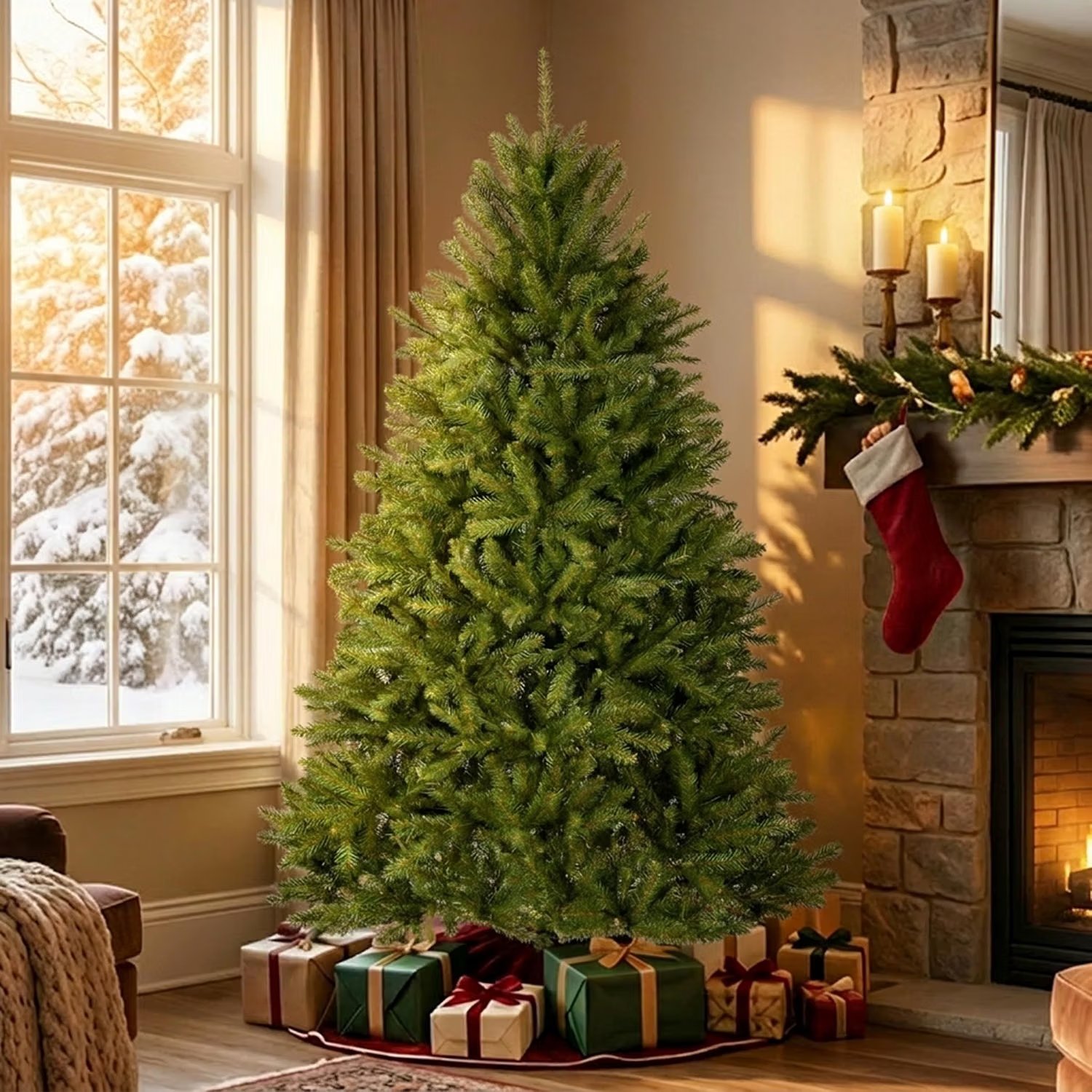
National Tree Company 6ft Unlit Dunhill Fir
6-foot unlit Dunhill fir with PVC branch tips and hinged branch construction
$100 - $150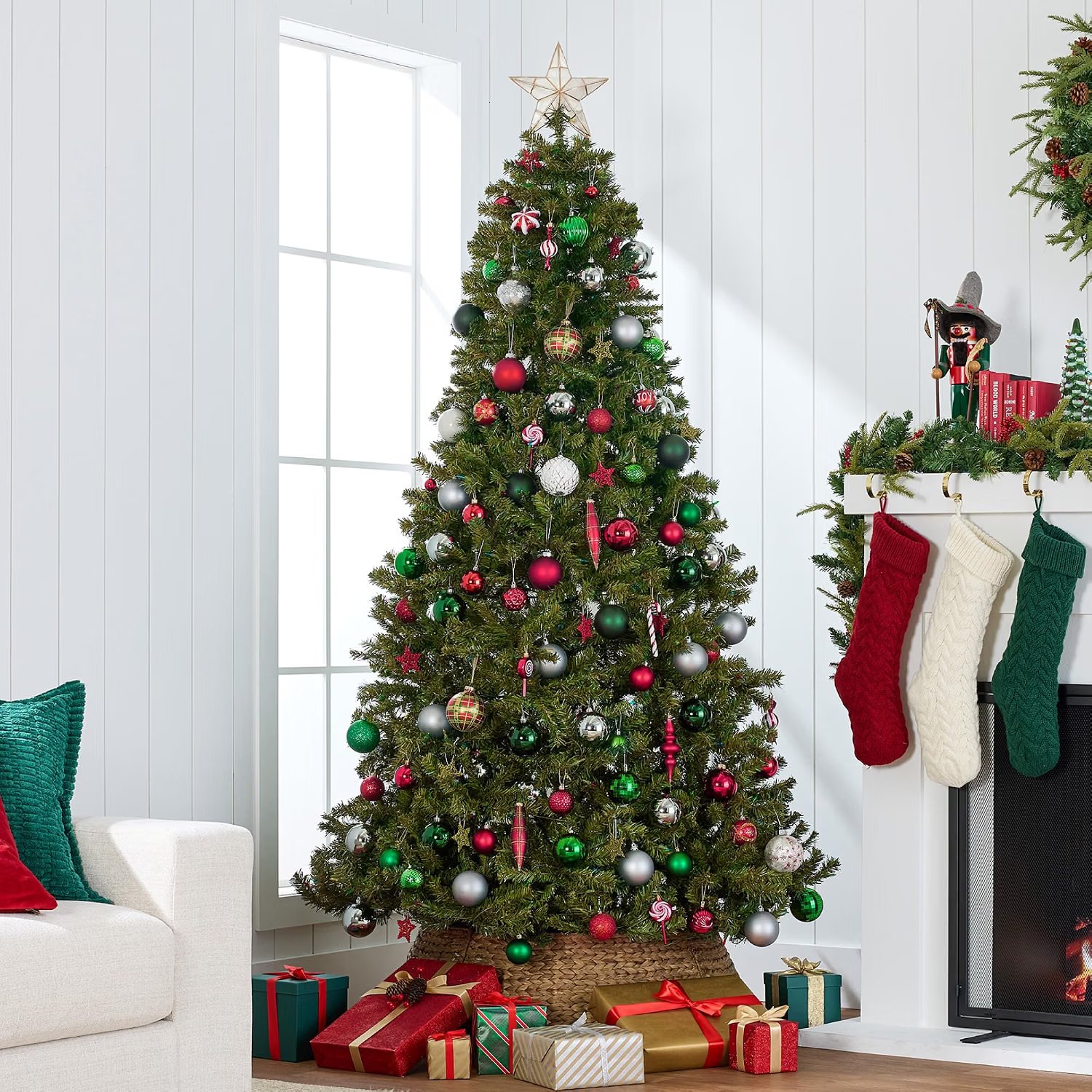
Best Choice Products 7.5ft Premium Unlit Spruce
7.5-foot unlit spruce that keeps a full-size tree within a budget-friendly price range
$75 - $100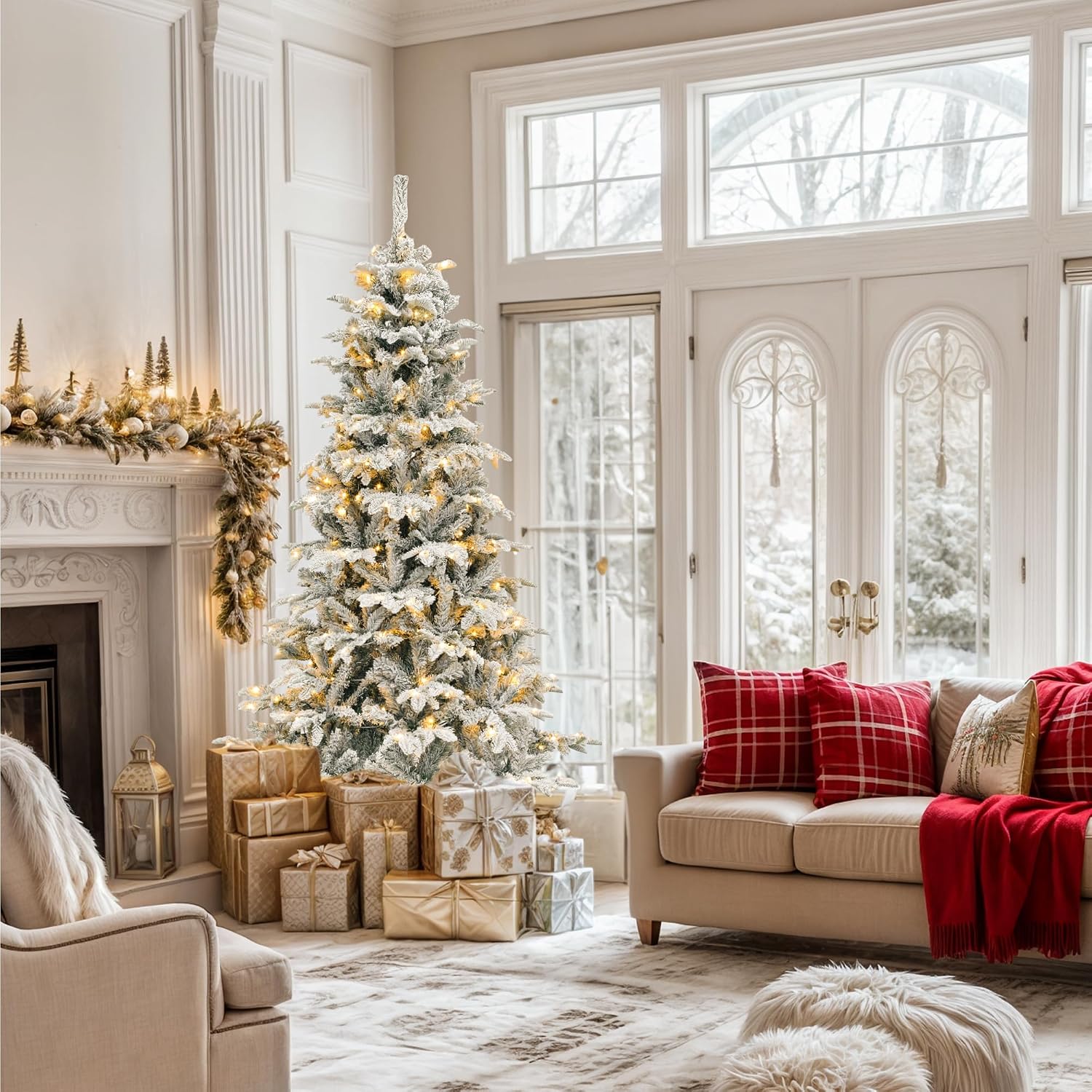
YITAHOME 7.5ft Layered Flocked Christmas Tree
Mixed PE/PVC layered flocked tree with pre-lit branches and remote control
$130 - $155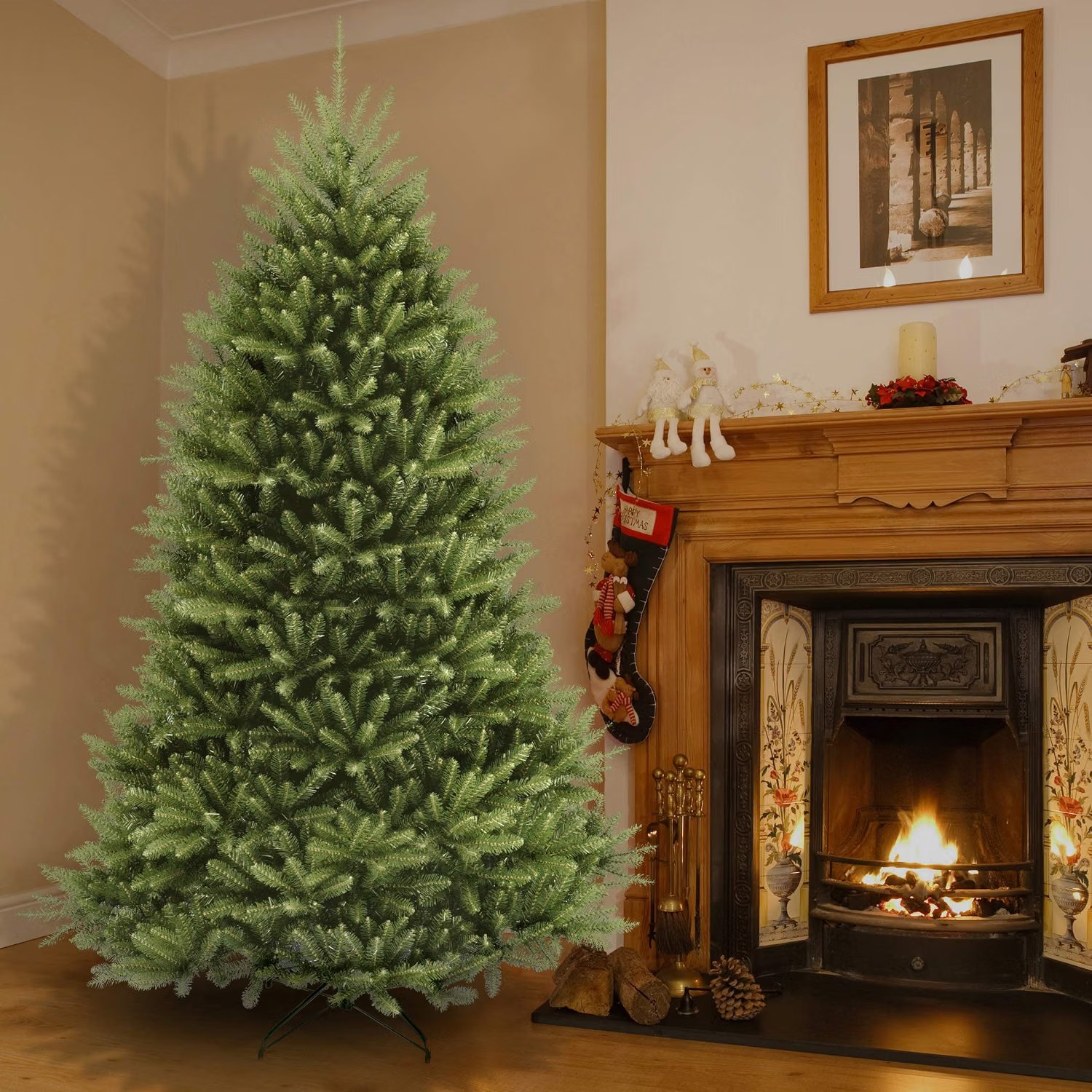
National Tree Company 7.5ft Unlit Dunhill Fir
7.5-foot unlit Dunhill fir with hinged PVC branches for larger rooms
$200 - $250